
Pneumatic vs. Heavy-Duty Manual Toggle Clamps
Posted by RMT on Oct 15th 2026
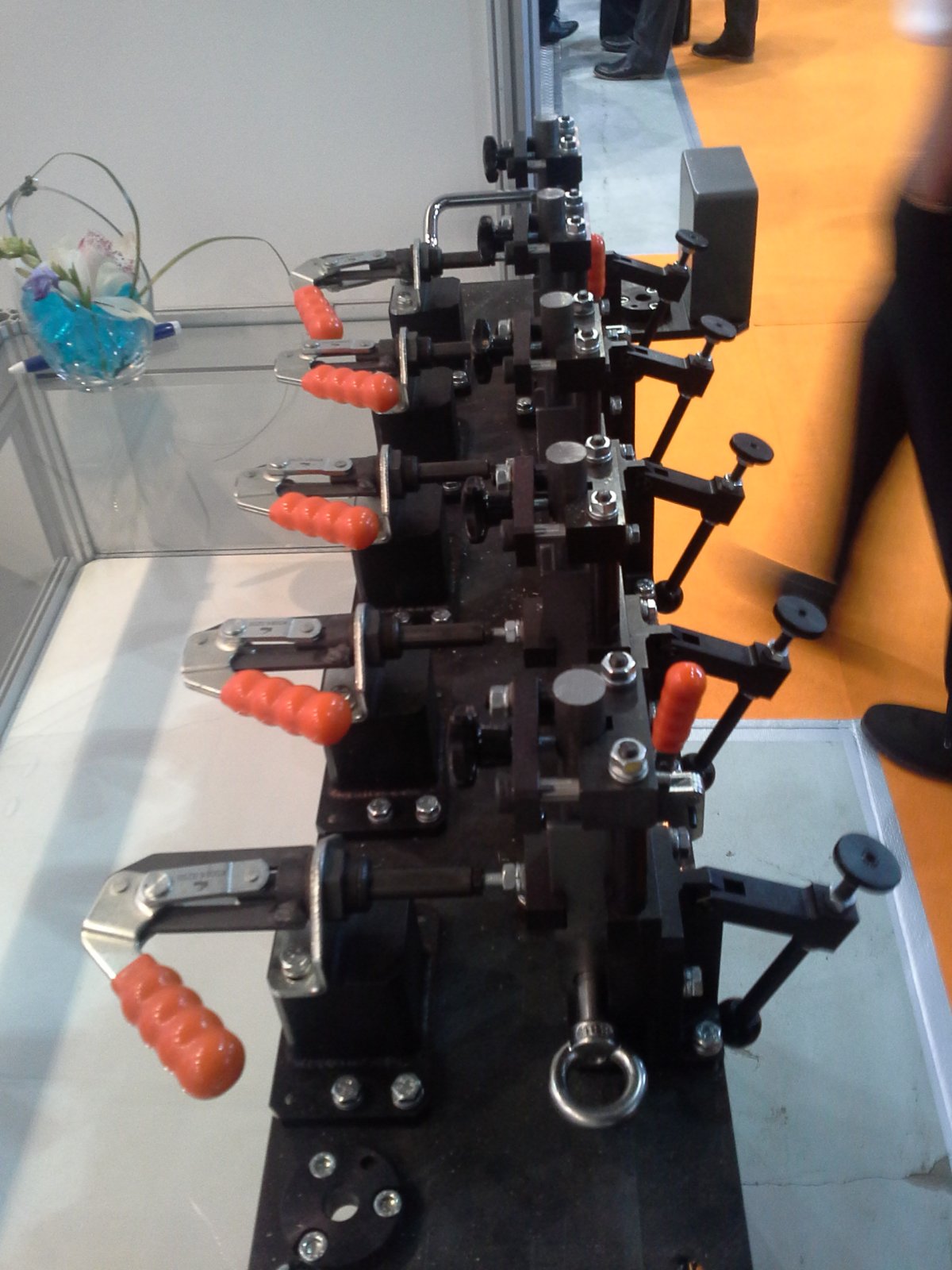
The choice between pneumatic toggle clamps vs heavy duty manual toggle clamps comes down to whether faster, repeatable actuation justifies adding compressed air and controls to your fixture. Pneumatic clamps can suit repetitive production, while a manual clamp may be more practical when operators work the fixture less often or the process has no pneumatic supply.
That tradeoff isn't just about speed: consider how often the clamp cycles, how it will be operated, and whether the fixture needs coordinated or remote actuation. Compare each model’s verified holding capacity, mounting style, spindle configuration, and application requirements rather than choosing by clamp category alone.
This comparison explains the practical differences in actuation and operating demands, then outlines where each system fits. It also covers the manual clamp options to consider for a non-pneumatic setup, including vertical and horizontal hold-down, latch, and push-pull straight-line designs, so you can narrow the choice to a clamp that suits the workholding process.
Key Takeaways
- Compare destaco pneumatic toggle clamps vs heavy duty manual toggle clamps by actuation method, operator input, and fixture integration needs.
- Before choosing pneumatic actuation, account for the compressed-air supply, valves, controls, and integration required by the process.
- Assess cycle demands alongside workpiece geometry, clamp access, mounting space, and the direction of applied force.
- Compare the exact model’s holding capacity, base style, spindle, material, and mounting details before selecting a manual clamp.
DESTACO Pneumatic Toggle Clamps vs. Heavy-Duty Manual Clamps: What Changes?
The key difference is how the mechanism receives input. A manual toggle clamp uses an operator-applied handle; a pneumatic toggle clamp uses compressed air to move its mechanism. In short, actuation describes how a clamp moves, while rated holding capacity describes the load the specified clamp can resist. Neither actuation type alone establishes a clamp’s capacity or suitability.
How manual and pneumatic toggle mechanisms operate
On a manual clamp, the operator moves the handle, and linked arms transfer that motion to the clamping spindle, hook, or plunger. In an over-center design, the linkage passes center and resists opening while properly engaged. The operator positions and releases each clamp by hand, so access to the handle and clearance for its travel matter in the fixture layout.
A pneumatic model uses air-powered movement to actuate the mechanism. Its cylinder arrangement, valves, control method, and operating requirements depend on the specific model. Those details affect how it connects to the available air supply and fixture controls. For general context on clamp types and applications, see Clamp (tool).
What the term heavy-duty does, and does not, tell you
“Heavy-duty” is a descriptive label, not a universal capacity class. It doesn’t establish a clamp’s holding capacity, dimensions, mounting pattern, spindle configuration, or suitability for a particular workpiece. Compare the manufacturer’s published specifications for the exact model and configuration. Holding capacity is not the same as the clamping force applied to the workpiece, so don’t treat one figure as a substitute for the other.
In comparing destaco pneumatic toggle clamps vs heavy duty manual toggle clamps, assess the actuation method separately from each model’s rating. Ridiculous Machine Tools offers manual toggle clamp designs in vertical, horizontal, latch, and push-pull straight-line categories; compare the relevant model details against the fixture’s space, force direction, and mounting needs.
Pneumatic vs. Manual Toggle Clamps: Compare Cycle, Air, and Control Needs
For destaco pneumatic toggle clamps vs heavy duty manual toggle clamps, compare the work sequence, not just the clamp motion. Pneumatic actuation can support repeated or coordinated clamping, while manual actuation leaves each engagement to the operator. Neither option guarantees a particular cycle time or repeatability; those depend on the clamp, fixture, controls, setup, and operating method.
When pneumatic actuation may fit the process
Evaluate pneumatic clamps when several clamps need to operate in sequence, or when the fixture is part of a controlled production process. Account for the air supply, valves, controls, and how actuation will be integrated with the fixture. Then verify the specific clamp’s operating requirements and compatibility with the planned setup. Pneumatic actuation adds infrastructure, so its value depends on what the process gains from it.
Manual clamps avoid pneumatic connections and control components, but the operator still has to engage each clamp. That input can vary between operators or cycles. A repetitive fixture alone doesn’t make pneumatic actuation necessary: if direct handle operation fits the work sequence and access is practical, a manual clamp may be sufficient.
When a manual toggle clamp may be sufficient
Manual actuation can suit a fixture that an operator loads, positions, and unloads directly, especially when clamping is one step in a broader hands-on task. Check whether the handle can travel freely and whether the operator can reach it without interfering with the workpiece or adjacent fixture components. Ridiculous Machine Tools’ manual toggle clamp categories include vertical, horizontal, latch, and push-pull straight-line designs for different clamp orientations and force directions.
Compare the current workflow with the proposed one: identify how clamps are engaged, whether multiple actions must be coordinated, and what air and controls are already available. This makes the choice specific to the fixture. If operator-actuated workholding fits the process, compare manual clamp styles and model specifications before selecting a configuration.
How to Select Between Pneumatic and Heavy-Duty Manual Clamps
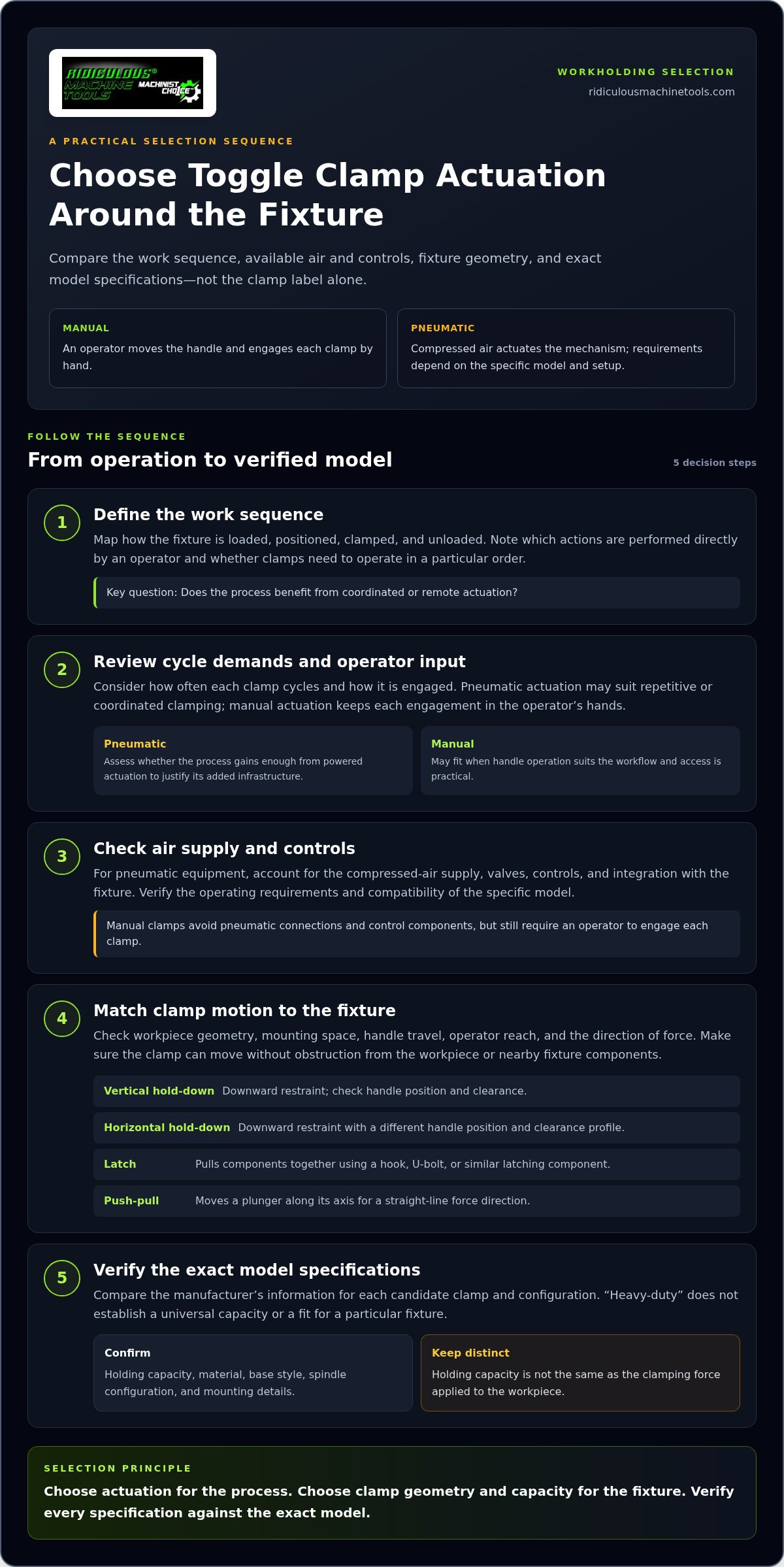
Use a simple sequence: define the operation, estimate how often and in what order clamps cycle, review available air and controls, then compare specifications for the exact models under consideration. The choice between destaco pneumatic toggle clamps vs heavy duty manual toggle clamps depends on this process review, not the clamp label alone.
A practical application checklist
At the fixture, check whether an operator can reach and engage each clamp consistently without obstruction. Record the cycle pattern, air availability, control requirements, and maintenance needs. Then review workpiece geometry, mounting space, and the direction of force. For pneumatic equipment, include the air supply and control integration in the review; for either actuation method, assess how the fixture will be operated and maintained.
Match clamp geometry to the fixture
Choose geometry by the clamp’s motion and the force direction the fixture needs. Vertical and horizontal hold-down designs apply downward restraint but differ in handle position and clearance. A latch clamp pulls components together; a push-pull straight-line clamp moves a plunger along its axis. For a low-profile handle arrangement, compare the mounting and clearance details of horizontal manual toggle clamps with the fixture layout.
Before selection, compare each candidate’s published holding capacity, material, base style, spindle, and mounting details. These specifications vary by model. Holding capacity does not, by itself, establish the force applied to a workpiece or prove that a clamp is suitable for a particular fixture. Review the complete fixture design and applicable safety requirements; clamp style alone is not a safe-capacity assessment. Keep a record of the selected model and its specified limits as part of the workholding documentation.
Choose a Manual Toggle Clamp When It Fits, and Compare the Exact Model
Choose the actuation method and clamp geometry that fit the fixture and work sequence. Pneumatic actuation may suit coordinated operation, while a manual clamp can fit a process where the operator can engage it directly. The deciding factors are the fixture’s requirements and the exact model’s published specifications, not the clamp category alone.
Choose the manual clamp configuration by movement
A vertical hold-down clamp may suit a fixture when its handle travel and hold-down arm clear the workpiece and nearby hardware. A horizontal hold-down design may fit where handle position or overhead clearance affects access. A latch clamp closes with a hook-style motion; a push-pull straight-line manual clamp applies force through linear plunger movement. Choose by the movement and clearance the fixture allows.
Finish the comparison with model-specific data
Review the exact product information for holding capacity, material, base style, mounting details, and supplied spindle configuration. These specifications vary by model, so don’t infer them from a category label or another clamp’s data. Holding capacity is not automatically the clamping force applied to a workpiece. Assess the selected clamp as part of the complete fixture and its safety requirements.
Ridiculous Machine Tools offers manual horizontal, vertical, latch, and push-pull clamp configurations to compare when operator-actuated workholding fits the process. Match the clamp’s movement and mounting arrangement to the fixture, then verify the specifications for the model under consideration before selection.
Compare manual toggle clamp options
Set the Fixture Up for a Confident Decision
Before finalizing a fixture, record the actuation choice and the reasons behind it. That gives operators, process engineers, and purchasing teams a shared basis for reviewing a change in cycle method or fixture layout later. The question of destaco pneumatic toggle clamps vs heavy duty manual toggle clamps is most useful when tied to the actual work sequence, not treated as a choice based on labels alone.
Ridiculous Machine Tools offers manual horizontal, vertical, latch, and push-pull clamp categories. Product specifications vary by model, and USA-based quality control and inspection follow each product’s established specifications. Use the applicable product information to make the final comparison against your fixture requirements.
A clear selection process helps keep workholding decisions practical and grounded in the job. Choose the configuration that supports your operation, then move forward with confidence.
Frequently Asked Questions
Are pneumatic toggle clamps stronger than manual toggle clamps?
Not necessarily. Actuation type alone doesn’t determine a clamp’s rated capacity or the force it applies. Compare the specifications for the exact models. For example, a clamp’s holding capacity describes its resistance to a load, while clamping force refers to force applied to the workpiece. Consider load direction and fixture design before deciding whether either model suits the operation.
Do pneumatic toggle clamps need a compressed-air system?
Yes. Pneumatic clamps use compressed air for actuation, but the supply, valve, and control requirements depend on the specific model and installation. Review the manufacturer’s documentation before planning connections or integrating the clamp with a fixture control system. Don’t assume that one model’s air requirements or control arrangement applies to other clamps in the same product family.
When should I choose a heavy-duty manual toggle clamp?
A manual clamp may fit a station where an operator can engage it directly as part of loading or assembly. The term “heavy-duty” alone doesn’t identify a standardized capacity. Check the exact model’s published holding capacity and mounting requirements, then consider how the clamp will be accessed and used. A descriptive label cannot replace model-specific information or an application review.
Can manual toggle clamps be used in CNC fixtures?
They can be used when the clamp’s location, access, retention, and rated capacity suit the fixture and operation. Review potential tool travel and machine-envelope interference during setup. Also consider the machining loads and how the workpiece is supported. Don’t assume a clamp is suitable for a particular cut based on its style; assess its published data as part of the complete fixture.
How do I compare a DESTACO pneumatic clamp with an RMT manual clamp?
Compare the intended operation, actuation method, required infrastructure, clamp geometry, mounting arrangement, and published specifications for each exact model. Use current product documentation, and check how each manufacturer defines its capacity rating before comparing values. Differences in rating definitions can make figures unsuitable for a direct comparison without further review. The final choice should fit the fixture and work sequence.
Article by
Ridiculous Machine Tools Technical Team
The Ridiculous Machine Tools Technical Team provides practical information about precision machine tooling, CNC tooling, workholding, and related manufacturing applications. RMT focuses on helping machinists, manufacturers, fabricators, and other customers understand tooling specifications, compatibility, selection, and proper application. Our technical content draws on product specifications, industry knowledge, and RMT's quality-control experience to provide clear, useful information for selecting and using machine tooling and workholding products.
Ridiculous Machine Tools — Machinist's Choice™