
Sealed collet pressure ratings for deep hole carbide drilling Best Practices and Expert Advice
Posted by RMT on Nov 8th 2026
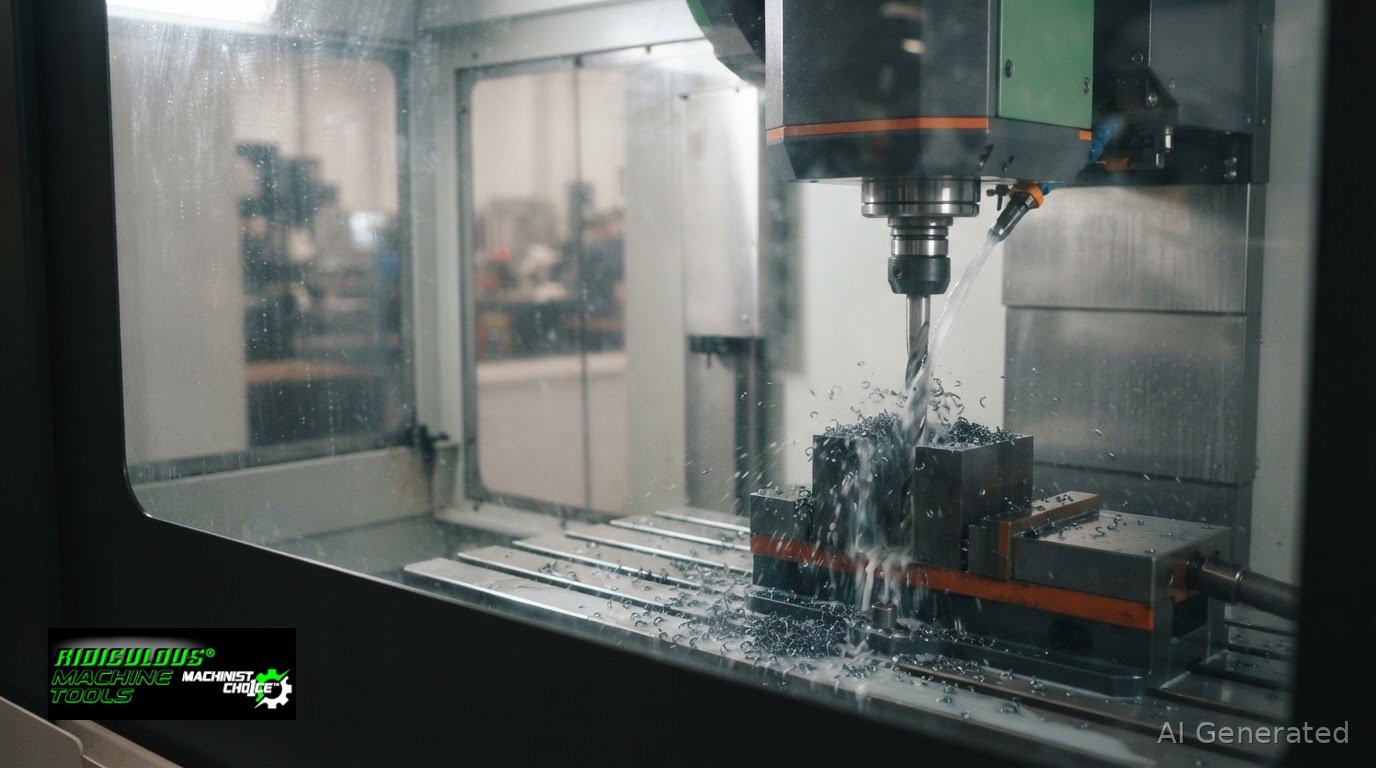
Sealed collet pressure ratings for deep-hole carbide drilling are only one part of selection: the holder should support high-pressure coolant systems of at least 1,000 PSI, and the collet rating must suit operating pressure. Through-tool coolant helps carry chips from deep holes, while long reach makes runout and vibration control important; many premium solid-carbide drills running at high RPM call for toolholder runout of 0.0002 inches or less.
This article explains how holder reach, collet clamping force, repeatability, and coolant delivery shape the setup decision.
Key Takeaways
- Choose the shortest holder reach that clears the part to help control deflection and vibration during deep-hole drilling.
- Assess clamping consistency alongside coolant sealing; repeatable tool seating supports more consistent drilling setups.
- Match the sealed collet’s pressure rating to the coolant system and the pressure needed for chip evacuation.
- Compare the full assembly, including collet, chuck, and coolant path, rather than selecting by the collet rating alone.
1. Deep-hole and long-reach holder selection
For deep-hole carbide drilling, select the shortest, stiffest holder that clears the part. Added reach increases deflection sensitivity, so holder geometry and spindle clearance matter alongside coolant capacity. Many premium solid-carbide drills running at high RPM call for toolholder runout of 0.0002 inches or less. That target helps limit uneven cutting loads, which can affect tool life and hole finish.
A sealed collet, hydraulic chuck, and shrink-fit holder clamp the tool in different ways. Hydraulic holders may suit long-reach drilling because their damping helps absorb vibration. A slim shrink-fit holder can limit clamping accuracy, while a sealed collet’s pressure suitability depends on its model and compatible chuck. Compare reach, runout, and coolant specifications for the complete assembly.
Are sealed collets rated for through-tool coolant or external coolant delivery? Steel Sealed ER Spring Collets are intended for through-coolant use, where coolant passes through the holder and drill. External flood coolant is delivered outside the tool, so it does not rely on the collet’s internal coolant seal in the same way.
What do sealed collets for deep-hole carbide drilling cost in the United States? This is the current price for that specific product; don’t treat it as the price of other sizes or configurations.
How does a sealed collet compare with a hydraulic chuck or shrink-fit holder for high-pressure drilling? A sealed collet enables coolant-through delivery with a compatible holder. Hydraulic holders add damping, while shrink-fit holders clamp through thermal expansion. For high-pressure coolant systems, the holder-selection benchmark is at least 1,000 PSI; the collet’s own rating must also suit the setup.
Before choosing, compare the required reach, the complete assembly’s runout and coolant specifications, and the collet’s listed pressure rating with system conditions. Consider holder clearance, tool support, and coolant delivery together.
2. Collet clamping force and repeatability
Repeatable clamping starts with the correct collet size and clean contact surfaces. A shank that sits unevenly can shift the tool axis, causing uneven cutting, variations in hole size, or poor surface finish. For production, record the tool diameter, collet identification, chuck, and tightening procedure. Compare runout after reassembly to catch changes before they affect a batch.
Which manufacturers publish pressure ratings for sealed collets, and where can you find their specifications? Manufacturers that publish ratings include them in product specifications, technical data sheets, or compatible-holder documentation. Find the exact model and size, then match its stated conditions to the holder and coolant path. A rating for one collet does not establish another model’s limit.
Pressure limits depend on seal design, collet size, coolant type, and compatible holder. Speed matters too, since operating conditions can raise temperature and affect seal behavior. Read the stated pressure conditions alongside the machine speed and coolant details. Sealed collet pressure ratings for deep-hole carbide drilling apply to the specified configuration, not every ER assembly.
To preserve the rating, follow the manufacturer’s installation sequence. Clean the collet, nut, and seating surfaces before assembly. Inspect the sealing face and collet slots for damage or debris. Seat the tool shank within the specified diameter range, and use the tightening method stated for the chuck. During routine maintenance, remove coolant residue and inspect for wear that could affect sealing or repeatable seating.
Exceeding a sealed collet’s pressure rating can cause leakage, damage the seal, or interrupt coolant delivery to the drill. Leakage can reduce coolant reaching the cutting zone and disrupt chip evacuation. If a leak appears after setup, stop and inspect the assembly rather than increasing pressure. Before resuming, check the collet, holder, and coolant connections for damage, contamination, or incorrect seating.
In the guide's cited case study, a drill with R-thinning reduced thrust force by 25-40% compared with other drills. The guide gives a 30 m/min cutting speed for a 21 mm drill in its thrust-force case study. For a setup where thrust is under review, these figures offer context for evaluating the drilling process alongside clamping checks; they do not replace verification of collet seating, runout, or pressure conditions.
3. What pressure ratings are available for sealed collets used in deep-hole carbide drilling?
There isn’t one universal pressure rating for sealed collets. Published limits vary by collet model, size, sealing design, and compatible holder. Treat each rating as specific to its documented configuration, not as a value that transfers across ER sizes. For example, a rating for one ER32 model doesn’t establish the limit for another collet or chuck.
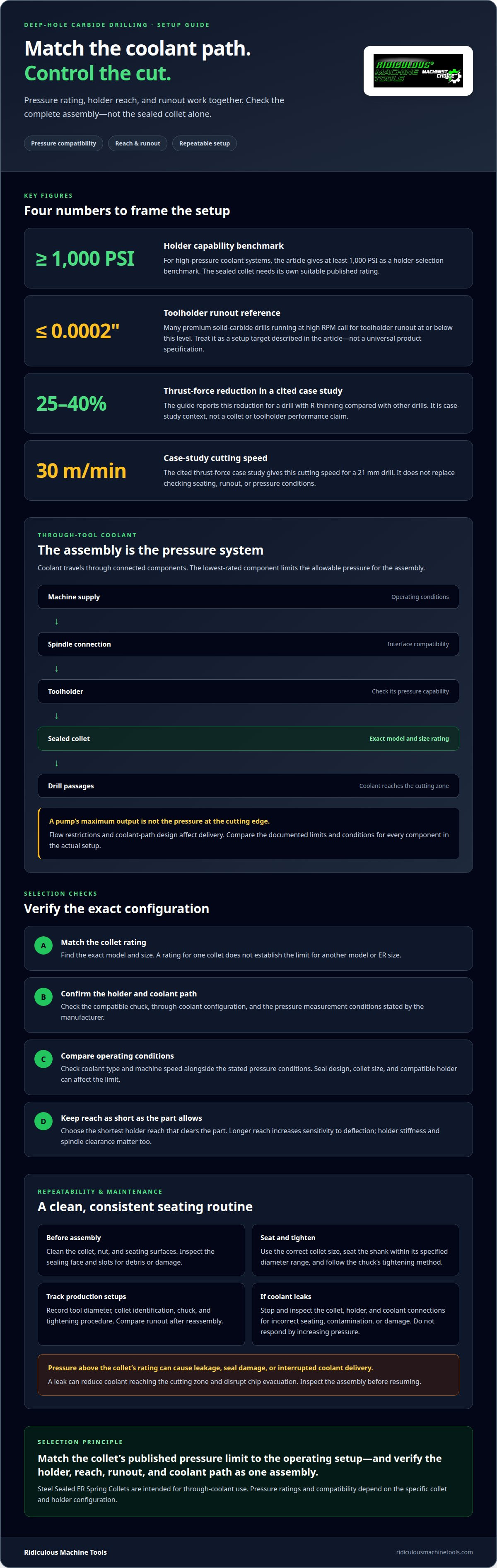
Read the collet and holder specifications together. A through-coolant assembly includes the machine supply, spindle connection, toolholder, collet, and drill passages. The lowest-rated component limits the allowable pressure for the assembly. A pump’s maximum output alone does not establish pressure at the cutting edge, because flow restrictions and coolant-path design affect delivery.
Compare the rating’s stated conditions with the actual operation. Check whether the manufacturer identifies the collet size, holder interface, coolant configuration, and pressure measurement point covered. Confirm that the coolant type suits the seal materials. If the rating applies to a specific holder-collet combination, don’t apply it to a different assembly, even within the same ER series.
For deep-hole carbide drilling, select a sealed collet with a published pressure limit that covers the intended system pressure. Then compare that limit with the holder’s rating and the machine’s operating conditions. A toolholder recommendation of at least 1,000 PSI does not establish a sealed collet’s individual rating. It describes a holder capability, so the collet must be assessed separately.
- Match the exact collet model and size to its published pressure limit.
- Confirm the compatible chuck and coolant-through configuration.
- Compare every assembly component’s pressure limit before setup.
- Keep coolant type and operating conditions within the manufacturer’s stated parameters.
Pressure ratings guide selection, not clamping force or runout. A sealed collet’s pressure limit describes coolant containment under stated conditions; it does not by itself establish tool grip, repeatability, or drilling accuracy. Check those requirements separately for the carbide drill and operation.
4. What maximum coolant pressure is required for deep-hole carbide drilling?
There is no single maximum pressure for every deep-hole carbide operation. A practical holder-selection benchmark is support for high-pressure coolant systems of at least 1,000 PSI. That figure describes holder capability, not a universal operating target or the rating of every sealed collet. The collet, chuck, machine connection, and drill passages must each suit the planned pressure.
Set pressure to support chip evacuation through the drill, taking the material and hole geometry into account. Long chips in stainless steel can obstruct the flutes, so high-pressure coolant may improve evacuation and possibly tool life. Useful pressure depends on chip formation, drill design, coolant flow, and the path from the machine supply to the cutting edge. A pressure gauge at the pump alone does not show conditions at the tool.
Distinguish the maximum supported pressure from the pressure the operation requires. A sealed collet’s rating sets a limit for its stated configuration; the machine’s operating pressure must remain within the compatible assembly’s limits. Don’t infer the collet rating from the holder’s rating. Check the collet, holder, and through-coolant path as one system before running the carbide drill.
Use this selection sequence for a deep hole:
- Determine the coolant pressure and flow available at the machine.
- Match the holder and sealed-collet ratings to the system’s operating conditions.
- Assess chip evacuation for the work material and drill geometry.
- Confirm coolant reaches the cutting edge through the assembled tool path.
Pressure alone won’t correct poor chip control. If chips remain packed in the flutes, review coolant delivery and drilling conditions rather than raising pressure beyond a component’s rating. In stainless steel, effective high-pressure delivery can help move long chips out of the hole, but pressure selection still depends on the complete setup.
Explore ER spring collet options
At high RPM, solid-carbide drills typically require toolholder runout of 0.0004 inches or less. Balance needs also depend on speed: toolholders behave differently at 6,000 RPM than at 20,000 RPM, so choose a holder balanced for the operating condition.
For holes deeper than >3 x DC, internal coolant is preferred to help avoid chip jamming. Through-tool coolant carries coolant through the drill to the cutting edge. Keep the coolant tank volume 5-10 times larger than the volume of coolant the pump supplies per minute.
Ridiculous Machine Tools: Horizontal Toggle Clamps
Ridiculous Machine Tools offers Horizontal Toggle Clamps for securing workpieces on suitable fixtures. They address a separate part of the setup from a sealed collet: the clamp holds the workpiece, while the collet grips the drill and supports coolant-through delivery. Select a clamp based on fixture layout, workpiece access, and the required hold-down arrangement. RMT also offers Push-Pull Straight Line Toggle Clamps, Latch Toggle Clamps, and Vertical Toggle Clamps for different clamping directions and configurations. These options are relevant when a drilling operation also needs dependable fixture workholding; they do not set or replace the collet assembly’s coolant-pressure rating. Visit ridiculousmachinetools.com to review RMT’s toggle clamp options.
Make the Next Setup Repeatable
Turn the selection criteria into a shop-floor setup record. For sealed collet pressure ratings for deep-hole carbide drilling, record the exact collet and holder combination, coolant conditions, tool reach, and machine used. Add trial-cut results, including chip evacuation and hole quality. This gives programmers and operators a clear starting point when the setup returns to production or moves to another machine.
Keep the record tied to the specific tooling configuration. A change in holder, collet, drill, or coolant path can affect assembly performance, so document revisions instead of relying on memory. This makes future process reviews more useful and helps the team distinguish tooling changes from changes in cutting conditions.
For related fixture workholding needs, Ridiculous Machine Tools offers horizontal, latch, and vertical toggle clamps.
Use a documented setup as the next step toward consistent, informed shop-floor decisions.
Frequently Asked Questions
How do sealed collet pressure ratings vary by collet size and toolholder type?
Ratings depend on the specific collet size, sealing design, and compatible toolholder. Don’t assume a larger collet has a higher rating or that a rating carries over to another holder in the same taper family. Replacing a collet while keeping the holder unchanged still changes the assembly. Match the manufacturer’s pressure specification to the exact collet and holder combination in use.
Article by
Ridiculous Machine Tools Technical Team
The Ridiculous Machine Tools Technical Team provides practical information about precision machine tooling, CNC tooling, workholding, and related manufacturing applications. RMT focuses on helping machinists, manufacturers, fabricators, and other customers understand tooling specifications, compatibility, selection, and proper application. Our technical content draws on product specifications, industry knowledge, and RMT's quality-control experience to provide clear, useful information for selecting and using machine tooling and workholding products.
Ridiculous Machine Tools — Machinist's Choice™