
The Ultimate Guide to Er25 vs er32 collet capacity for job shop versatility
Posted by RMT on Oct 22nd 2026
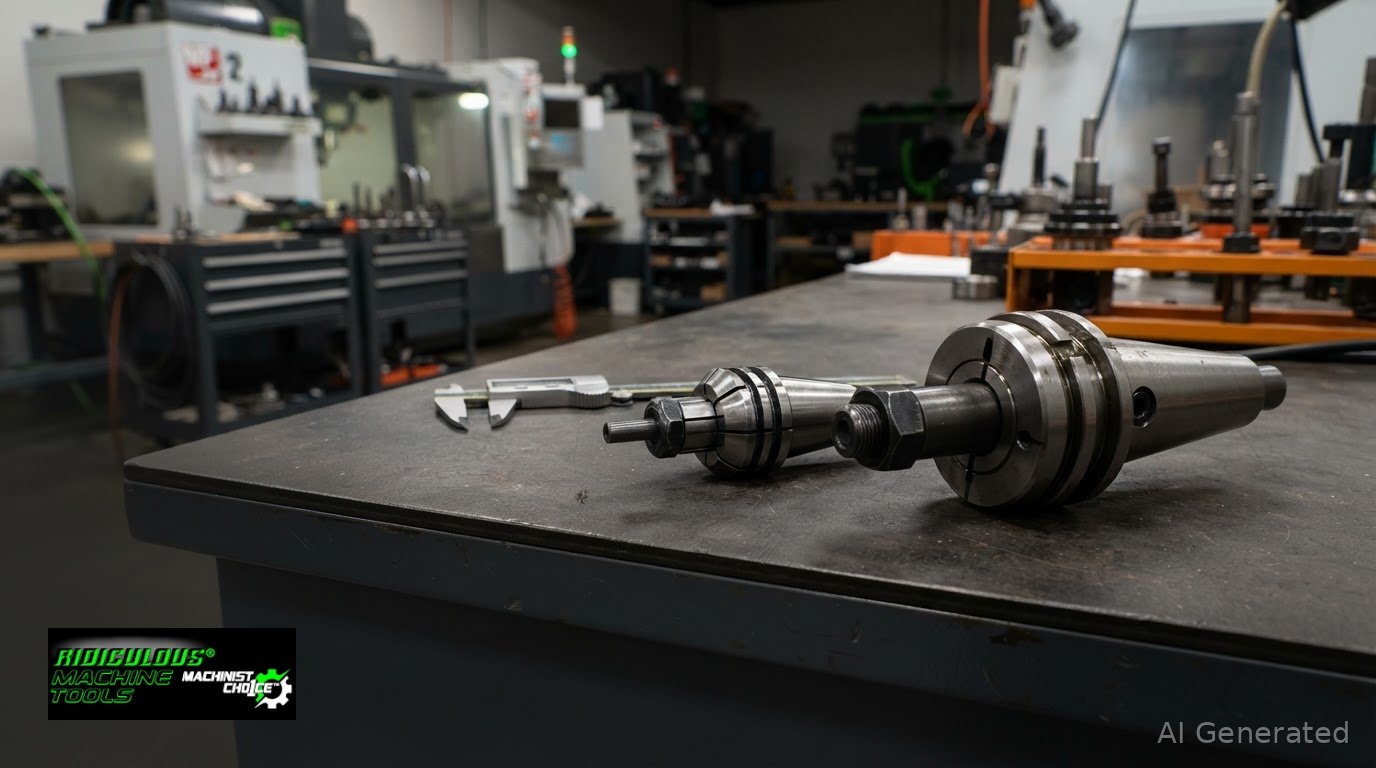
The larger collet system isn’t automatically the more versatile one. For er25 vs er32 collet capacity for job shop versatility, the key difference is the shank sizes your work requires: standard ER25 sizes cover 1 mm to 16 mm, while ER32 sizes cover 2 mm to 20 mm.
ER32’s larger capacity can help with mixed work that includes tools over 16 mm, but the chuck and nut also take up more space. ER25 and ER32 collets are not interchangeable, so changing series means using a compatible chuck and matching tooling setup.
This guide compares usable diameter coverage with the practical limits that matter at the machine, including access, spindle compatibility, and setup consistency. Use it to review your active tooling and decide whether one series can cover most jobs or whether both have a defined role in the crib.
Key Takeaways
- Compare ER25 and ER32 by the shank diameters your jobs use, not just each series’ maximum capacity.
- Chuck and nut clearance, machine interfaces, and existing setups all affect which series is practical.
- Map recurring tool diameters to the stated collapsible range of a specific collet before standardizing.
- Match collet and chuck series, then evaluate runout using specifications for the actual components and setup.
ER25 vs ER32 Collet Capacity: Job Shop Impact
For a job shop, capacity means the shank diameters a specific ER spring collet can grip within its stated collapsible range. It does not mean one collet grips every diameter across the series’ full span. A basic explanation of how a collet works can help clarify the difference: the collet contracts around a compatible shank when seated in its matching chuck.
How to read ER collet capacity without guessing
Series coverage is a useful first filter, but it does not replace the specification for an individual collet. These general ER25 and ER32 ranges describe the series, not the gripping interval of a single collet or every manufacturer’s product.
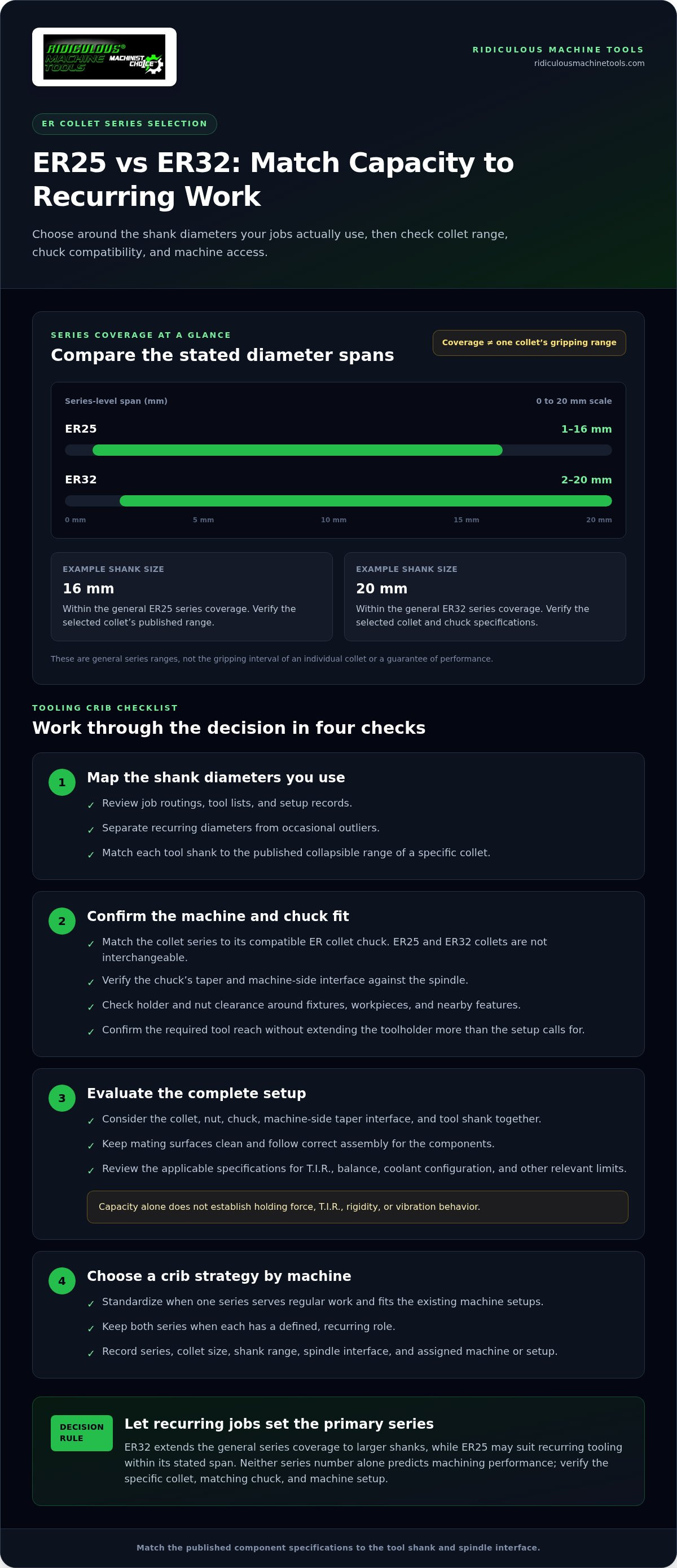
- ER25: Standard collet sizes cover shank diameters from 1 mm to 16 mm.
- ER32: Standard collet sizes cover shank diameters from 2 mm to 20 mm.
ER32 can accommodate larger tooling when the selected collet’s stated range and the compatible chuck specifications support that shank diameter. For example, a 16 mm shank is within the general ER25 series coverage, while a 20 mm shank falls within ER32 coverage. Check the individual collet’s marked or published range rather than inferring it from the series name.
This comparison helps identify which recurring tool sizes one system can cover and where a larger series may be needed. It does not establish clamping force, T.I.R. (Total Indicator Runout), or vibration behavior. Those depend on the specified components and assembled setup, not simply on the ER series number.
Ridiculous Machine Tools offers ER spring collets in multiple configurations. Compare the applicable product specifications with the tool shank and matching chuck series before selecting a collet.
ER32 vs ER25: Capacity vs Performance
Capacity describes the shank sizes a collet is specified to grip. It does not establish holding force, T.I.R., rigidity, or vibration behavior. A larger ER series can accommodate larger shanks within its specified range, but that alone does not predict how a tool will perform in a cut.
For another overview of series sizing, see this ER25 vs ER32 Collet Comparison. Use size information to narrow the options, then compare performance specifications for the actual tooling system.
What determines the result at the spindle?
The assembled system includes the collet, nut, ER collet chuck, machine-side taper interface, and tool shank. Runout can be affected by component specifications, cleanliness at mating surfaces, and correct assembly. These are general setup considerations, not evidence that either series inherently runs truer or holds more securely.
Check practical constraints alongside the collet’s shank range:
- Access: Compare the holder and nut envelope with nearby workpiece features, fixtures, and machine clearances.
- Tool length: Confirm the required reach without extending the toolholder more than the setup calls for.
- Spindle interface: Match the chuck’s taper and machine connection to the spindle.
- Performance limits: Review the applicable chuck and collet specifications for stated T.I.R., balance, coolant configuration, and other relevant limits.
Capacity describes supported shank sizes, not a guaranteed machining result. Ridiculous Machine Tools offers ER collet chucks. Compare the selected chuck’s specifications with the collet and spindle interface before setting up the tool.
Choosing ER25 or ER32 for Mixed Job Shop Work
Choose a primary collet series based on recurring work, not the largest shank diameter that might appear once. Review job routings, tool lists, and setup records. Note regularly used shank diameters, holders assigned to each machine, spindle interfaces, and clearance around fixtures or workpieces. Record occasional outliers separately so they do not determine the everyday setup.
A practical selection sequence for the tooling crib
- List recurring work: Record the shank diameters used on regular jobs, then separate occasional sizes.
- Map collets: Match each recurring diameter to the published range of a specific collet.
- Check the machine setup: Verify the chuck series and spindle interface, then assess holder clearance and access.
- Review the pattern: Standardize when one series serves regular work and fits the existing machine setups.
Apply this process machine by machine. If existing holders serve the machines running most recurring tools, standardizing on that system may simplify crib organization. If a machine has a different interface or access constraint, account for it separately instead of assuming the same holder setup fits every spindle.
Keeping both systems can make sense when each has a defined, recurring role. Track collets and holders by series, machine interface, and assigned setup so the right components are easier to identify at changeover. This record also helps purchasing match new tooling to actual demand rather than duplicating rarely used sizes.
Compare the applicable product details in the ER spring collet listings with the sizes and setups in your tooling plan.
Standardize the setup and match ER collets to the chuck
Before adding tooling, check the specifications for the complete setup. Confirm the chuck and collet series, then compare the tool shank diameter with the specific collet’s published collapsible range. Verify the chuck’s machine-side interface and review any stated performance limits for that configuration.
A compatibility check before adding another ER series
Record the series, collet size, shank range, and spindle interface alongside the machine or setup where each component is used. This crib record clarifies what a new collet or chuck needs to fit and helps prevent selection based on the nominal ER size alone.
For mixed tooling, keep the applicable product specifications with the setup record. Compare RMT’s ER spring collet options with the corresponding ER collet chuck specifications, then check both against the intended tool and machine interface.
Choose according to the shank sizes your shop uses regularly, the existing machine interfaces, and the access each setup allows. Standardize where it simplifies recurring work; retain separate setups when distinct machine or job requirements justify them.
Make the Next Tooling Decision with Confidence
Put the decision into a written purchasing standard so future orders support a consistent tooling plan. Review the standard as the shop’s work changes, using operator needs and actual tool usage to guide updates.
Compare RMT’s ER spring collets and compatible chucks to find a setup that matches your recurring tool sizes and machine interfaces.
Article by
Ridiculous Machine Tools Technical Team
The Ridiculous Machine Tools Technical Team provides practical information about precision machine tooling, CNC tooling, workholding, and related manufacturing applications. RMT focuses on helping machinists, manufacturers, fabricators, and other customers understand tooling specifications, compatibility, selection, and proper application. Our technical content draws on product specifications, industry knowledge, and RMT's quality-control experience to provide clear, useful information for selecting and using machine tooling and workholding products.
Ridiculous Machine Tools — Machinist's Choice™