

Stop Tool Holder Fretting: Spindle Cleaning Guide
Posted by RMT on Nov 20th 2026
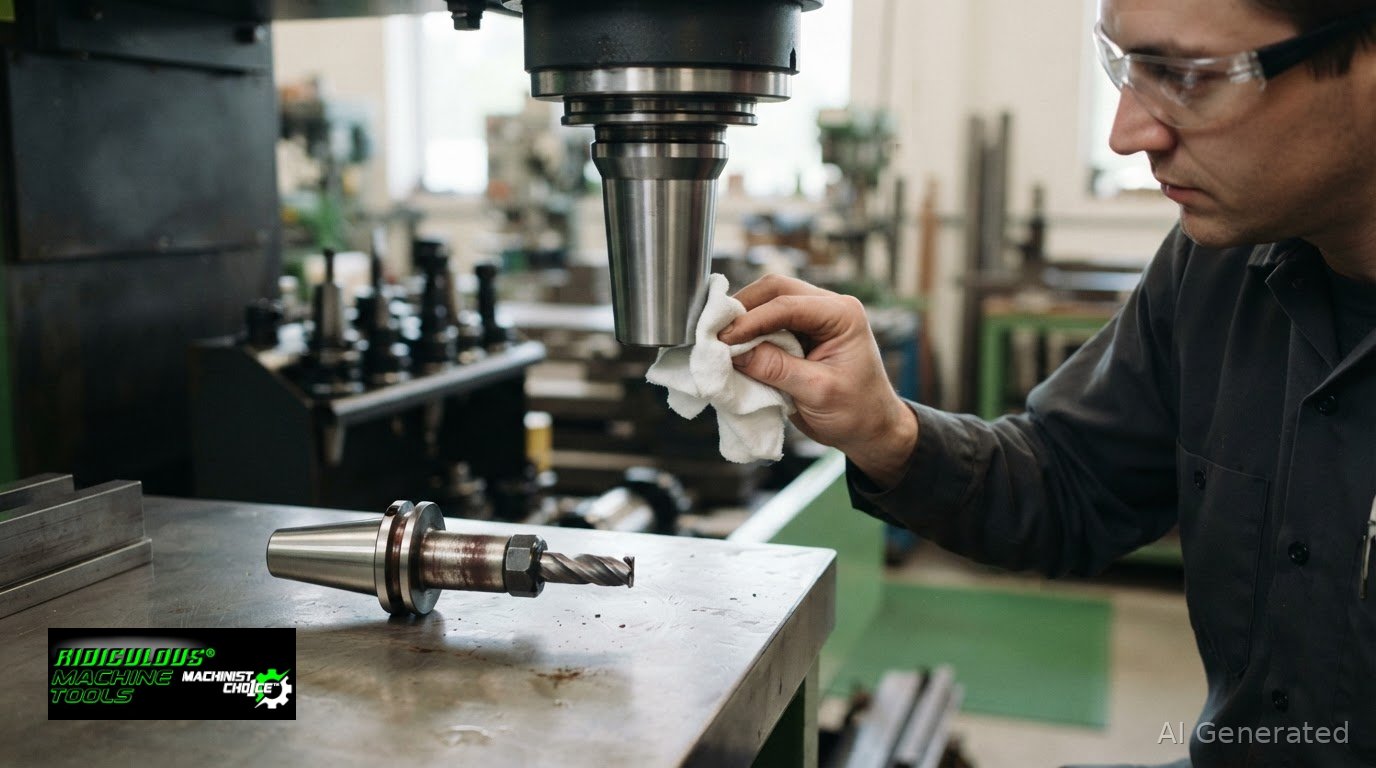
Uneven marks on a toolholder taper can indicate fretting, moisture-related rust, or poor spindle contact. The distinction matters: cleaning can remove contamination, but it cannot correct a damaged taper or weak drawbar retention. To understand tool holder taper fretting causes and spindle cleaning protocols, first identify the mark pattern and check how the holder seats instead of repeatedly polishing away evidence of wear.
Fretting can develop when imperfectly mating tapers move against each other, generating vibration and heat; rust-like marks may instead result from moisture. This guide explains how to distinguish them, clean spindle and holder surfaces without removing material, assess vibration and heat, and recognize when taper damage means a toolholder needs replacement.
Key Takeaways
- Use the location and appearance of taper marks to help distinguish fretting from moisture-related rust.
- Look beyond the toolholder: drawbar retention, taper contact, cutting loads, and tool-change alignment can all contribute to uneven wear.
- Clean mating surfaces carefully; aggressive or repeated abrasion can remove material and make fit problems worse.
- Assess taper condition, runout, and machining results to decide whether a holder remains suitable for service or needs replacement.
Weird Wear On Toolholders and Spindle, What Could be the Cause?
Uneven taper marks can indicate fretting, poor contact, contamination, or damage. Compare the spindle and holder patterns before cleaning or returning the tooling to cutting service.
Taper Wear and Fretting Patterns
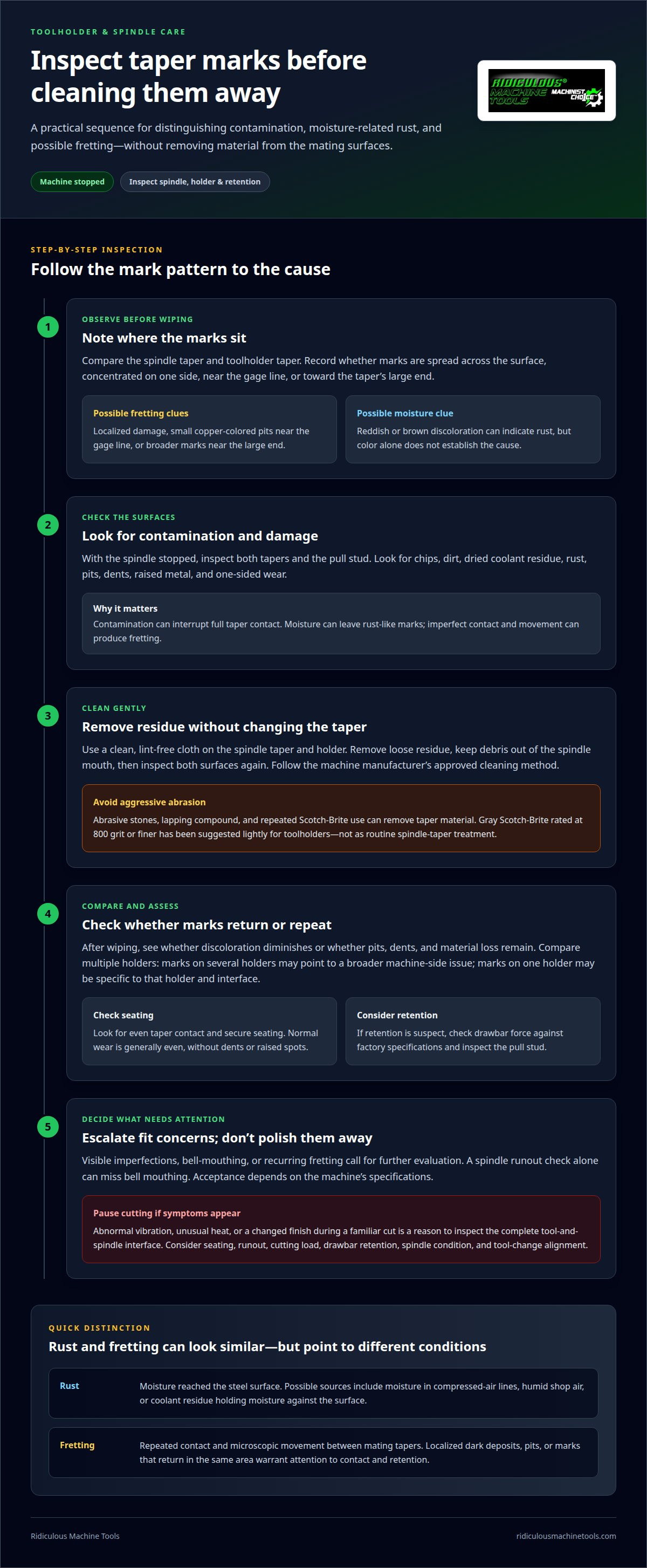
Fretting is localized surface damage caused by movement between a toolholder and spindle taper. Small copper-colored pits near the gage line or broader marks near the taper’s large end can indicate this contact problem. Normal wear is generally even along the taper, without dents or raised spots. One-sided wear may instead suggest misalignment, poor seating, or uneven contact. Bell-mouth wear changes the spindle taper’s shape, so the holder may not seat consistently. A spindle runout check alone can miss bell mouthing.
Contamination and Fretting Causes
Contamination interrupts full taper contact and can let the holder shift under cutting load. Chips, dirt, or dried coolant residue between mating surfaces create localized contact points; moisture can leave rust-like marks. A damaged pull stud can also compromise retention and seating. Clean and inspect the spindle taper, holder taper, and pull stud with every use. If fresh holders develop recurring marks, consider drawbar retention, radial cutting load, spindle condition, and tool-change alignment rather than focusing on the holder alone.
Spindle Taper Inspection Criteria
Inspection compares surface condition, taper contact, and holder seating with the machine’s requirements. Manufacturers’ intervals vary by machine; a practical baseline is to clean and check the spindle and holder tapers with every use. With the spindle stopped, inspect for chips, rust, pits, dents, raised metal, and one-sided wear. Check that the holder has even contact and seats securely. Acceptance depends on the machine’s specifications: visible imperfections, bell mouthing, or recurring fretting call for further evaluation. If retention is suspect, check drawbar force against factory specifications.
Spindle Taper Cleaning Protocols
Cleaning removes loose contamination without changing the taper’s geometry. With the machine stopped, wipe the spindle taper and holder with a clean, lint-free cloth; remove residue, then inspect both surfaces again. Keep chips and debris out of the spindle mouth, and use a spindle wiper to limit buildup. Follow the machine manufacturer’s approved cleaning method. Abrasive stones, lapping compound, and repeated Scotch-Brite use can remove material from the taper. Gray Scotch-Brite rated at 800 grit or finer has been suggested lightly for toolholders, not as routine spindle-taper treatment. For broader shop maintenance and keeping heavily soiled tooling hardware, fixtures, and machine components free of baked-on residue, systems from The Global One Group provide heavy-duty parts washing to support clean manufacturing environments.
Possible rust versus fretting corrosion
Rust and fretting can both leave marks on a spindle taper, but they indicate different conditions. Rust means moisture reached the steel surface; fretting means repeated contact and microscopic movement between mating tapers. Color can help with an initial assessment, but it cannot establish the cause on its own. Examine the mark’s texture and location, and see whether it returns after the surfaces are wiped clean.
Rust often appears as reddish or brown discoloration, sometimes spreading across exposed areas. Moisture in compressed-air lines can reach the spindle, while humid shop air can affect a machine that sits idle. Coolant residue can hold moisture against a surface. In woodworking environments, water vapor from sheet goods may condense on cooler machine components, including the spindle nose.
Fretting corrosion is associated with movement at the taper interface. Dark deposits or localized pits can appear where a holder and spindle make imperfect contact. Marks concentrated on one side or returning in the same area suggest that surface rust alone may not explain the pattern. A holder that sticks or develops marks soon after installation also warrants attention to seating and retention, not just moisture control.
Use a clean cloth to remove loose residue, then compare the exposed surface with the original mark. Rust discoloration may diminish after wiping, while pits, dents, or material loss remain. Check whether similar marks appear on multiple holders or only on one holder and one machine. This comparison can help distinguish a broader moisture problem from a specific taper-contact issue.
Do not judge the spindle by color alone. A dark mark can occur alongside rust, coolant film, or mechanical damage. Record where marks appear and whether they return after cleaning and a tool change. If the surface has raised metal, visible pitting, or a repeatable one-sided pattern, treat it as a fit or damage concern instead of polishing until the color disappears.
Vibration, heat, and spindle damage
Imperfect contact between a spindle taper and toolholder can cause microscopic movement during rotation. This creates vibration and frictional heat, which can accelerate fretting at the contact area. Even small seating errors matter: a holder that does not contact the spindle evenly can shift under cutting load. The resulting vibration can affect surface finish and machining accuracy, especially when the cutting tool extends from the holder.
Runout adds another source of vibration. As the tool rotates off its intended axis, cutting forces can vary through each revolution. The tool may cut unevenly, leaving marks on the workpiece and increasing load on the cutting edge. Continued operation under those conditions can raise spindle heat and stress the spindle bearings. A change in finish, abnormal vibration, or unusual heat during a familiar cut is a reason to inspect the complete tool-and-spindle interface.
Cutting load matters, too. Excessive radial load can increase movement between poorly mating tapers. A bell-mouthed spindle may let a holder unseat under cutting pressure, reducing contact and stability. This can add stress to the toolholder, retention knob, and drawbar. Broken cutters or damaged retention components may follow; replacing a cutter alone will not correct a seating or retention problem.
Separate the symptoms before changing the process. Stop the machine if vibration or heat appears, then inspect the holder taper, spindle contact area, and cutting tool for damage. Compare the affected holder with another compatible holder, and note whether the same symptoms return in the same spindle. If vibration follows one holder, that holder may be the source; if several holders behave alike, investigate the spindle interface and drawbar retention. Reducing radial load may help limit fretting, but it will not correct damaged taper geometry. Treat recurring runout, poor finish, or heat as a reason to diagnose the interface before resuming the cut.
When to replace a fretted tool holder
Replace a holder when its taper has noticeable fretting, pits, dents, or raised spots. These defects can interrupt taper contact and affect seating, runout, and repeat positioning. A smooth, even wear pattern differs from localized damage, but visual inspection alone cannot establish dimensional condition. Treat recurring marks as a reason to assess the holder and spindle interface before returning it to cutting service.
Check the assembly before deciding which component has failed. Clean the taper, then inspect the holder, spindle seat, collet, and nut for damage or contamination. Measure runout with the tool installed, using the machine’s acceptance criteria. If the assembly cannot meet the applicable T.I.R. criteria, isolate the source: the collet, nut, toolholder, or spindle may be responsible. Replace the damaged component rather than trying to polish away taper defects.
Look at machining results as well as the holder surface. Poor repeat positioning, changing part accuracy, excess vibration, or fresh chip marks can indicate unstable seating. Compare results with a known-compatible holder in the same spindle. If the problem follows one holder, retire that holder; if it appears across multiple holders, investigate the spindle taper and drawbar retention. Toolholder shanks are reported to have a dimension life of about 3-5 years, but condition and measured fit matter more than age alone.
A spindle taper needs repair or evaluation for regrinding when bell-mouth wear, damage, or poor contact prevents the holder from seating to machine specifications. Typical costs depend on spindle design, damage extent, access, and whether the spindle must be removed; no single price applies across machines. Use machine-specific acceptance criteria to distinguish a holder replacement from a spindle issue.
For a replacement holder, match the spindle taper, tool interface, and cutting application. Explore end mill holders for compatible configurations.
A forum respondent advised checking machined-part accuracy and chip marks to assess whether the toolholder is locked and repeat positioning is good. Most toolholders are usually worn beyond new ANSI or DIN specifications.
Ridiculous Machine Tools: End Mill Holders
Ridiculous Machine Tools offers end mill holders for shops sourcing replacement tooling after identifying a damaged holder. Choose a holder that matches the machine and cutting-tool requirements, not just the appearance of a taper mark.
Review the holder’s product details against your setup before ordering. Specifications can differ across product families and configurations, so base your decision on the relevant holder rather than assumptions drawn from another model.
Keep the Next Tool Change Consistent
Turn inspection observations into a shop-floor record that supports consistent decisions across shifts. Note the holder identity, machine, and any change in cutting behavior, then use those records to guide follow-up checks. This makes tool holder taper fretting causes and spindle cleaning protocols part of a repeatable process rather than an isolated response to visible marks.
When selecting replacement tooling, match the holder to the machine interface and application. Clear selection criteria help keep purchasing decisions aligned with production requirements.
A disciplined record gives your team a clearer starting point for the next tool change.
Frequently Asked Questions
What causes fretting on machine tool holder tapers and spindle tapers?
To narrow down the source, track each holder’s tool number, spindle, and tool-change history. Document the suspected tool holder taper fretting causes and spindle cleaning protocols used for each setup. If marks follow one holder across different compatible spindle positions, investigate that holder; if different holders develop similar patterns in one spindle, focus on shared machine-side conditions.
How can taper fretting be distinguished from normal contact marks or corrosion?
Preserve the evidence before aggressive cleaning. Photograph both taper surfaces under consistent lighting, then tag the holder and record where each mark sits relative to the gage line and flange. Avoid polishing first, since abrasion can remove useful surface evidence. Comparing dated images can show whether a mark is stable, spreading, or recurring after tool changes, helping guide the next inspection.
How can spindle taper contact and tool holder runout be checked?
Keep the measurement setup consistent so readings can be compared meaningfully. Record the holder identity, cutting tool, indicator position, and machine setup alongside each result. Measure the assembled tool at repeatable locations, and compare readings with the machine’s applicable acceptance criteria. A written baseline helps distinguish a changed holder or setup from a spindle condition affecting multiple assemblies.
What are the risks of operating a machine with a fretted or damaged spindle taper?
A damaged holder can create production-control problems beyond a poor cut. Parts may become inconsistent between tool changes, and operators may spend time adjusting offsets to compensate for a mechanical condition. Identify and tag suspect tooling so it does not return to an automatic tool-change sequence unnoticed. Keep affected holders out of production until the taper and assembly have been assessed against machine requirements.
Article by
Ridiculous Machine Tools Technical Team
The Ridiculous Machine Tools Technical Team provides practical information about precision machine tooling, CNC tooling, workholding, and related manufacturing applications. RMT focuses on helping machinists, manufacturers, fabricators, and other customers understand tooling specifications, compatibility, selection, and proper application. Our technical content draws on product specifications, industry knowledge, and RMT's quality-control experience to provide clear, useful information for selecting and using machine tooling and workholding products.
Ridiculous Machine Tools — Machinist's Choice™