
Sealed ER32 Collets: Stainless Steel Peck Drilling Guide
Posted by RMT on Nov 9th 2026
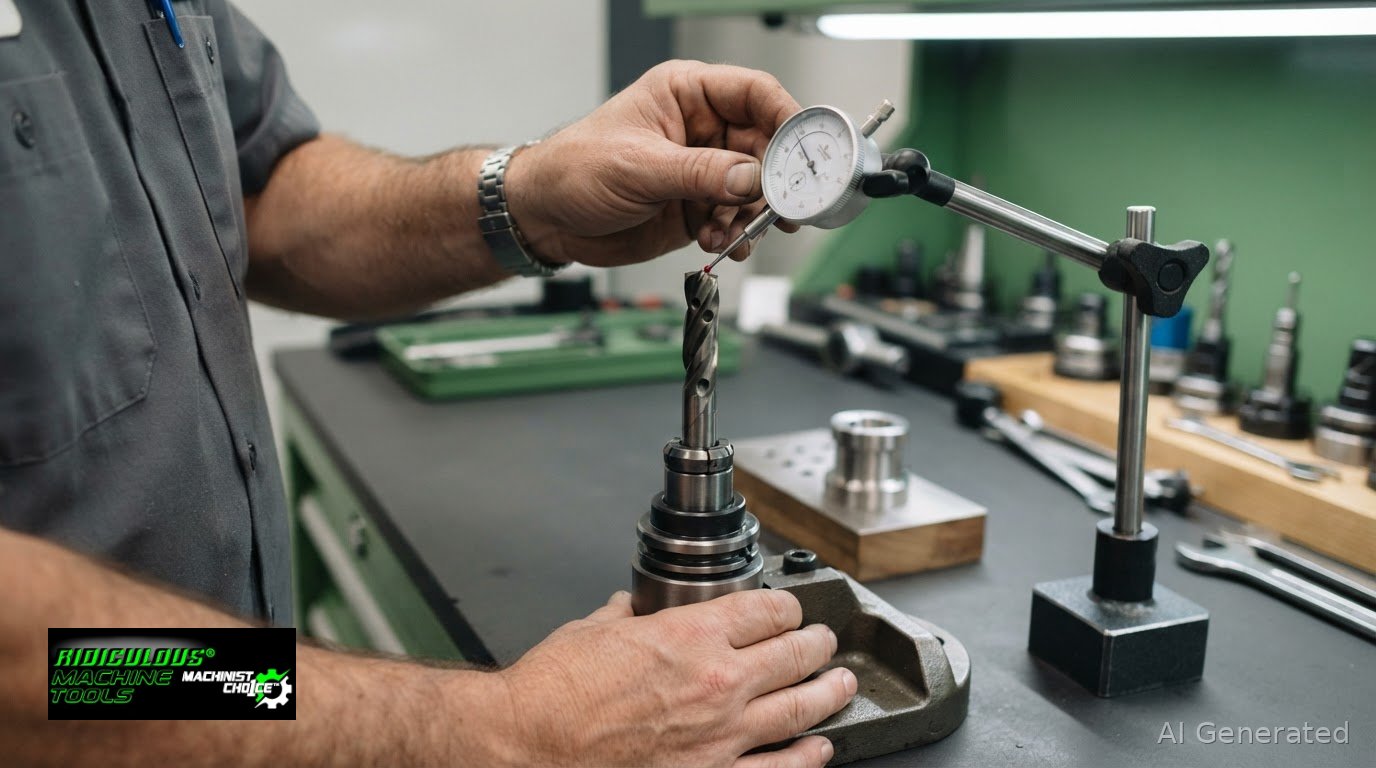
Sealed ER32 collets can suit stainless-steel peck drilling when the collet, drill, holder, and coolant path match the operation; the seal alone doesn’t establish compatibility. Selecting sealed ER32 collets for stainless steel peck drilling means weighing more than the ER32 designation: the drill shank, the collet’s capacity and grip characteristics, coolant delivery requirements, and the demands of the machining setup all affect the decision. This guide explains how to compare those factors, understand the differences between sealed and standard configurations, and assess price in relation to the specific collet you need. Use the information to narrow your selection before setup, identify which product details matter for your application, and recognize where the collet’s role ends and the drill, holder, coolant system, and workholding choices begin. The aim is a practical purchasing and setup framework for machinists who need coolant-through tooling for stainless-steel drilling, without treating one configuration as suitable for every drill or operation.
Key Takeaways
- Measure the drill’s shank and match it to the ER32 collet bore; nominal drill size alone won’t confirm the fit.
- Choose a collet close to the shank diameter so it can grip within its specified collapsible range.
- For coolant-through peck drilling, account for the sealed collet’s coolant function as well as the drill and holder compatibility.
- Compare the cost of the exact size and configuration you need; RMT lists its ER32 Steel Sealed Spring Collet in metric at $28.66.
Collet capacity
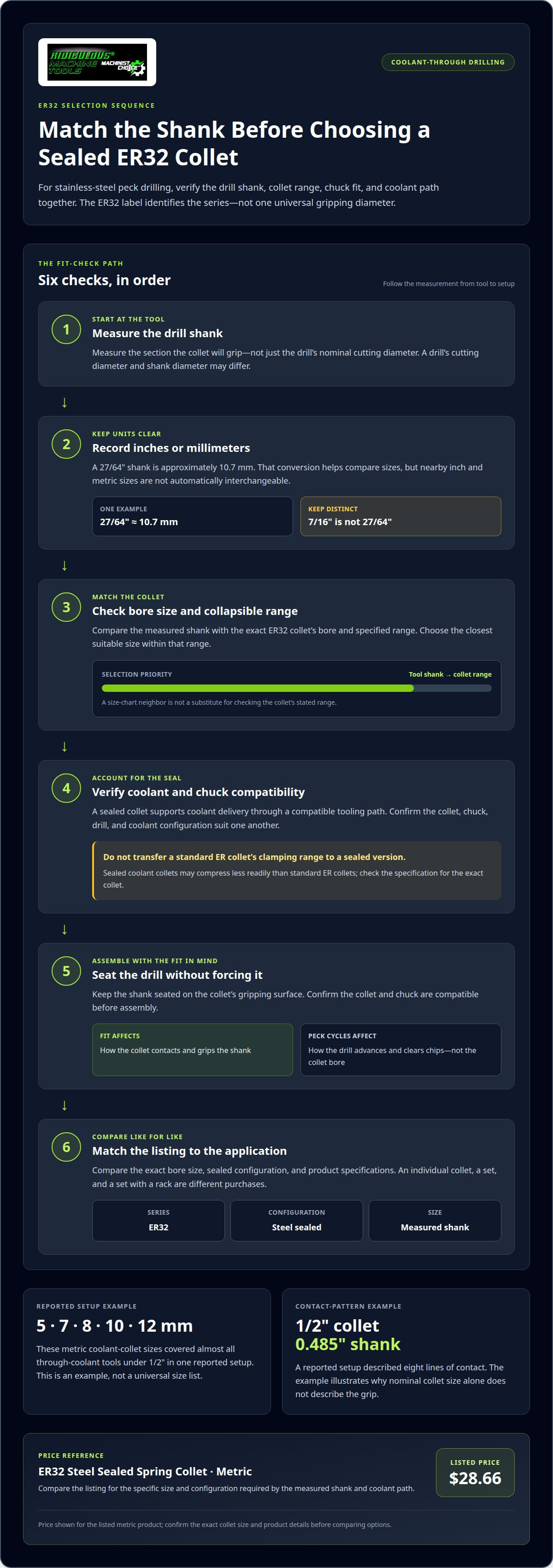
ER32 identifies the collet series, not one universal gripping diameter. Capacity depends on the bore size of the individual collet and its specified collapsible range. Match that bore to the drill’s measured shank, not simply the drill’s cutting diameter. For stainless-steel peck drilling, the shank-to-collet fit determines whether the tool is held appropriately.
A 27/64" shank is approximately 10.7 mm. That conversion can help when comparing inch drills with metric collet sizes, but it does not make nearby sizes interchangeable. In one discussed example, the drill shank was clarified as 7/16", not 27/64". Keep those dimensions distinct when selecting a collet.
Metric coolant collets in 5, 7, 8, 10, and 12 mm sizes have covered almost all through-coolant tools under 1/2" in one reported setup. Treat that as a practical example, not a universal inventory list. Your drill’s actual shank diameter remains the deciding measurement. A nominal drill size can describe the cutting diameter, while the shank may be a different size.
Use this selection sequence before installing the tool:
- Measure the drill shank where the collet will grip it.
- Identify whether the measurement is in inches or millimeters.
- Compare the measurement with the selected ER32 collet’s bore and collapsible range.
- Confirm the collet and chuck are compatible, then seat the drill without forcing it.
That process matters for coolant-through use because the sealed collet must grip the shank while supporting coolant delivery through the tooling path. A capacity mismatch cannot be corrected by pecking the drill. Peck cycles change how the drill advances and clears chips; they do not change the collet bore. Review the available ER spring collet options by size and configuration before choosing a sealed ER32 collet for stainless-steel peck drilling.
Collet grip range
For coolant-through drill shanks, choose a sealed ER32 collet whose stated collapsible range includes the tool diameter. The ER32 designation identifies the collet series, not its usable gripping diameter. The collet’s own range determines whether it can close correctly around a particular shank.
Contact changes as the shank sits farther below the collet’s nominal bore. A close size match can provide more continuous radial contact; a smaller shank may contact the bore along fewer lines. For example, a reported setup used a 1/2" ER collet to grip a 0.485" shank, creating eight lines of contact. That example shows why nominal collet size alone doesn’t describe the grip.
Sealed coolant collets may compress less readily than standard ER collets. Don’t assume the standard collet’s clamping range transfers to a sealed version. For one sizing example, suggested clamping domains were [ -1 .. 0 ] or [ -0.5 .. 0 ]. Those domains describe that example, not every ER32 collet. Use the specific collet’s range to assess whether it can grip without exceeding its intended collapse.
- Check the specified range for the exact sealed collet.
- Compare the tool diameter with the collet’s nominal bore.
- Favor the closest suitable size within the permitted range.
- Keep the shank seated on the gripping surface during assembly.
This fit check helps distinguish a workable size from a collet that only appears close on a size chart. It also keeps coolant sealing and tool retention in view as separate requirements: correct grip depends on the shank and collet range, while coolant delivery depends on the compatible tooling path. Review the listed ER spring collet configurations by size and type when comparing options for a specific drill.
One participant said a collet sized to the shank provides mostly continuous radial grip, while a smaller shank in the same collet can produce line contact. This describes how the shank size relates to the collet’s contact pattern. A participant also recommended using a collet closest in size to the tool shank for the best clamping.
For the example under discussion, a forum participant recommended ER collets with clamping domains of [ -1 .. 0 ] or [ -0.5 .. 0 ]. The recommendation concerns that example. The other sizing recommendation is to choose the collet closest in size to the tool shank for the best clamping.
Collet price
Compare ER32 sealed collets by matching configuration, not by series label alone. A metric collet and an inch collet serve different shank sizes, even when both fit an ER32 chuck. Sealing construction, bore size, and whether you’re buying an individual collet or a set also affect the purchase comparison. A price comparison is useful only when those details match your drilling setup.
For stainless-steel peck drilling, start with the measured drill shank and required coolant path. Then compare listings for the exact collet size and sealed design. A lower-priced collet with the wrong bore doesn’t meet the application. Nor does a standard ER32 collet become coolant-sealed simply because it fits the same chuck. Keep the collet, chuck, and coolant configuration in view.
Check what the listing includes before comparing order totals. An individual collet, a set, and a storage rack are different purchases. A set may suit a shop using several shank diameters, while a single collet may be the better fit for a dedicated drilling operation. Include shipping and applicable taxes when reviewing the total. These costs do not change a collet’s grip range or coolant function.
Use this comparison sequence:
- Match ER32 series and the drill’s measured shank diameter.
- Confirm the collet is sealed for coolant-through use.
- Compare single-collet, set, and rack contents separately.
- Review the applicable product specifications alongside the listed price.
Ridiculous Machine Tools lists Steel Sealed ER Spring Collets in metric, alongside other ER collet configurations. Compare the applicable size and product details in its ER spring collet selection. That keeps the decision focused on fit, coolant use, and what the purchase includes, rather than price alone. For a stainless peck-drilling setup, the useful comparison is the collet that matches the drill and coolant path, not simply the lowest listing.
ER32 stainless collet
For stainless-steel peck drilling, compare the collet’s sealing design, drill construction, shank fit, and the requirements of the complete coolant system.
Sealed and Standard Collet Comparison
A sealed ER32 collet is intended for coolant-through use; a standard ER32 collet holds the tool without that sealing function. For peck drilling, select the sealed type when coolant must pass through a compatible holder and drill with internal coolant passages. A solid drill without those passages won’t deliver coolant through its body. An incompatible shank can also prevent proper gripping or seating.
Sealed Collet Operation
The collet contracts around the drill shank as it seats and tightens in its compatible ER32 chuck. Its seal directs coolant into the intended toolholder path. Pressure and flow limits depend on the specific collet rating and the restrictions in the holder, coolant passages, and drill. The system’s narrowest or lowest-rated passage can constrain delivery, so assess the full path rather than the collet alone.
Collet Size and Runout
Select the collet bore for the drill’s measured shank and stay within that model’s stated collapsible range. No single runout recommendation applies to every ER32 assembly. Collet condition, chuck seating, shank quality, and assembly affect the measured result. Use the drill maker’s runout requirements for the operation, then measure the assembled tool near the working end to account for the full stack.
Installation and Maintenance
Before assembly, clean the chuck taper, collet, nut, and drill shank. Seat the collet in its nut according to the chuck maker’s instructions, then tighten using the specified procedure. During routine cleaning, inspect sealing surfaces and coolant passages for chips or damage. Set peck depth and cycle timing using the drill maker’s data, accounting for drill diameter and geometry, stainless grade, hole depth, chip evacuation, coolant delivery, and machine rigidity. Refine the cycle based on chip formation.
Compare ER spring collet configurations
Ridiculous Machine Tools: Horizontal Toggle Clamps
Ridiculous Machine Tools supplies Horizontal Toggle Clamps for fixtures that need low-profile, manual workholding. A clamp can secure a workpiece against a fixture during drilling, while the ER32 collet holds the drill in the spindle. These are separate jobs: choose the clamp for fixture access and workpiece restraint, and choose the collet for drill-shank fit and coolant delivery.
For a different fixture layout, Ridiculous Machine Tools also offers latch, vertical, and push-pull straight-line toggle clamps. The suitable style depends on the direction of restraint, handle clearance, and how the workpiece loads into the fixture. Match the clamp to the setup rather than treating it as part of the cutting-tool system.
Visit Ridiculous Machine Tools to review Horizontal Toggle Clamps.
Put the Tooling Decision Into Practice
Base your setup on the measured drill shank, collet specifications, and coolant path. The fixture should provide access to the drilling area while locating the workpiece appropriately. The right configuration depends on the part and fixture layout, not the collet choice alone.
For fixture work, Ridiculous Machine Tools offers horizontal, latch, and vertical toggle clamps. These styles suit different handle clearances and clamping arrangements. Choose one to match the workpiece and fixture, treating toolholding and workholding as separate decisions.
A considered setup for sealed ER32 collets for stainless steel peck drilling starts with compatible tooling and continues through secure, accessible workholding. Take the next step with the product information and selection options available from Ridiculous Machine Tools.
With each component matched to its task, you can move forward with a clearer setup plan.
Frequently Asked Questions
Are ER32 collets available with coolant-through seals for peck drilling?
Yes. Ridiculous Machine Tools offers Steel Sealed ER32 Spring Collets intended for coolant-through applications. They can be considered for peck drilling when the drill, collet, chuck, and coolant path are compatible. Before selecting one, match the collet’s bore to the drill shank and use the product’s stated specifications to assess fit and operating limits for your setup.
How much do sealed ER32 collets cost in the United States, and which brands sell them?
The supplied product information identifies this RMT option. Compare the exact collet size and configuration for your drill before buying, since an ER32 designation alone does not establish that a particular bore fits your tool.
What coolant pressure and flow limits apply to sealed ER32 collets?
Pressure and flow limits depend on the collet’s specific rating and restrictions in the holder, coolant passages, and drill. The narrowest or lowest-rated part of the coolant path can constrain delivery.
Article by
Ridiculous Machine Tools Technical Team
The Ridiculous Machine Tools Technical Team provides practical information about precision machine tooling, CNC tooling, workholding, and related manufacturing applications. RMT focuses on helping machinists, manufacturers, fabricators, and other customers understand tooling specifications, compatibility, selection, and proper application. Our technical content draws on product specifications, industry knowledge, and RMT's quality-control experience to provide clear, useful information for selecting and using machine tooling and workholding products.
Ridiculous Machine Tools — Machinist's Choice™