
Machining tooling: Everything You Need to Know
Posted by RMT on Oct 29th 2026
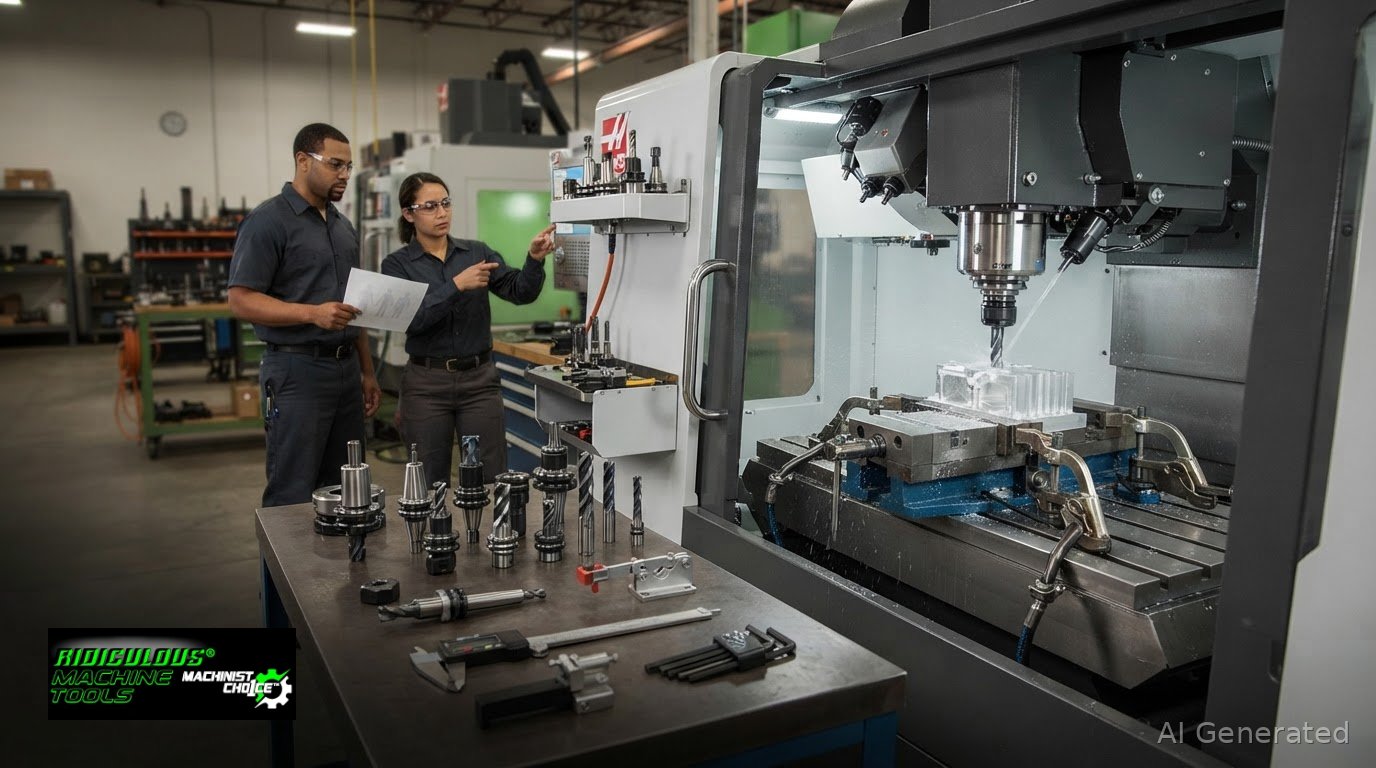
Tool selection, not machine capability alone, determines whether a CNC operation can produce a required feature and meet its dimensional target. Choosing machining tooling means matching each cutter and holder to the operation, workpiece material, spindle interface, and required precision. A familiar tool name is not enough: an end mill, drill, tap, or turning tool must suit the cut, and its holder must fit the machine and grip the tool correctly. This article explains what common CNC machining tools do, how to compare them for your application, and when technical guidance can help narrow your choices. You’ll see how cutting tools differ by function, how workholding and toolholding components support an operation, and which practical factors matter when selecting tooling for manual or CNC work. The goal is a clear path from the feature you need to machine to the compatible tools and setup that can produce it.
Key Takeaways
- Match each cutting, drilling, finishing, or measurement tool to the operation and the feature you need to produce.
- Compare carbide, HSS, ceramic, and CBN by workpiece material, cutting conditions, and application demands.
- Assess tooling costs by type, material, coating, tolerance, and brand, then weigh those factors against the job requirements.
- For fixture workholding, compare horizontal, vertical, latch, and push-pull toggle clamp designs by how they secure the workpiece.
17 Most Common CNC Machining Tools: How to Choose the Best Ones?
Machinist tools include the cutters, holders, and measuring devices used in shop operations. Choose each one by matching its function to the workpiece, required feature, and machine setup.
Tool Types and Shop Applications
Machine shop tools support work in garages, production shops, and factories, from manual mills to CNC equipment. A lathe rotates the workpiece; a milling machine rotates the cutter. Both remove material through controlled contact to shape a part.
- End mills cut slots and profiles; ball end mills contour 3D surfaces.
- Face mills and fly cutters machine flat surfaces.
- External turning tools, boring bars, grooving tools, parting tools, and inserts shape rotating workpieces.
- Twist drills, center drills, deep-hole drills, countersink drills, and jobber drills make or finish holes.
- Taps cut internal threads; thread mills create internal or external threads.
- Reamers finish holes; hollow mills shape bar outer diameters.
- Dovetail cutters can be used to form slots.
- Countersinks prepare hole edges; common angles include 82, 90, 100, and 120 degrees.
- Abrasive tools remove small amounts of material for finishing; digital readouts display machine position.
Electrical discharge machining removes conductive material through electrical erosion, while electrochemical machining removes it through controlled electrochemical action. These processes can suit features or materials that conventional cutting may not handle efficiently.
Tool Safety and Cost
Safe handling means securing the workpiece, using machine guards, wearing suitable eye protection, and stopping the spindle before adjustments or tool changes. Keep hands clear of rotating drill bits and cutters; remove chips with a brush, not fingers.
Cutting speed affects heat and tool wear. Feed rate affects chip load and cutting force, while depth of cut determines how much material is removed per pass. Balance all three with the tool, workpiece material, and machine rigidity.
For a CNC setup, seat the tool correctly, measure its length and diameter with suitable measuring equipment, and enter the corresponding tool offsets. Verify each tool and offset assignment before machining.
In the United States, tool costs depend on type, material, coating, tolerance, and brand. Compare these factors with the operation and expected tool use. Purchase price alone does not show a cutter’s value over the job.
Metalworking expertise and technical support
Metalworking expertise helps turn a part requirement into clear decisions about process sequence, inspection points, and setup constraints. A drawing’s datum scheme, bore location, and surface-finish callout all affect how the work is planned. When jobs call for re-machining worn internal diameters or handling on-site repairs, resources like Bore Repair Systems, Inc. - Bore Repair Made Easy with our USA made Lineboring and Boreweld solutions provide specialized machinery to re-establish proper tolerances. Reviewing these details together can identify questions before production begins, rather than after a feature fails inspection.
Technical support can help when terminology or interfaces create uncertainty. You may know the machine model but need to identify its spindle interface, or need to distinguish a holder’s machine connection from its cutting end. Sharing the machine model, drawing excerpt, workpiece material, and operation gives the discussion useful context.
Fixture planning also benefits from a considered metalworking perspective. For a plate with several faces to machine, the operation order affects which surfaces can locate the part later. A support point beneath a thin section can help limit movement, while clamp placement must leave the cutter path clear. These are layout questions, not simply product-name questions.
When production requirements change, compare the current and proposed processes feature by feature. If a new revision moves a slot closer to an edge, review tool access, fixture clearance, and inspection access before approving the setup. Document the revision and the reason for each change so operators can follow the correct plan.
A useful technical discussion should end with an actionable record: the application, machine or fixture context, unresolved compatibility question, and decision needed. This helps machinists, programmers, and purchasing staff stay aligned. It also creates a reference for the next setup review, reducing ambiguity when a similar part or process returns to the schedule.
What are the differences between carbide, HSS, ceramic, and CBN tools?
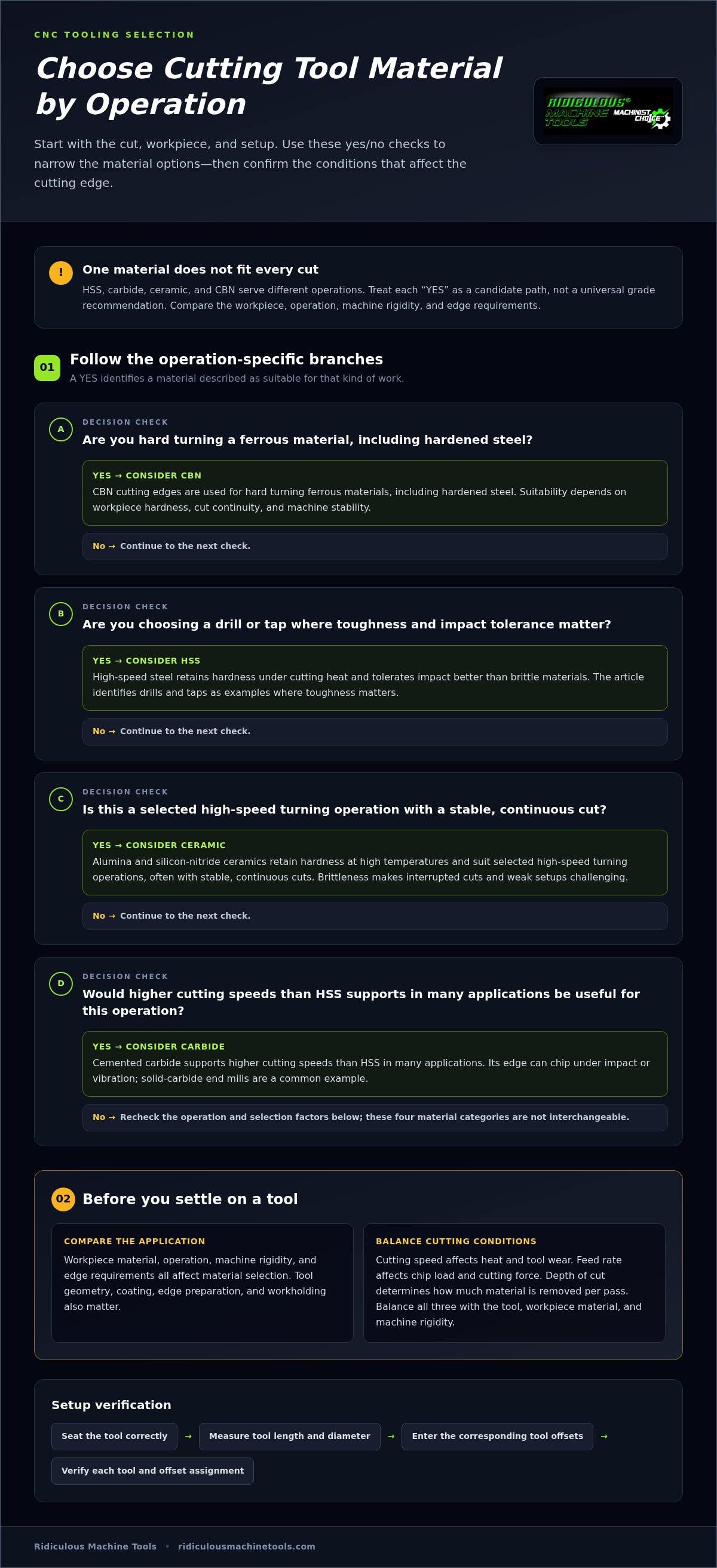
Tool material affects edge toughness, heat resistance, wear behavior, and suitable cutting conditions. Compare the workpiece, operation, machine rigidity, and edge requirements before selecting a grade. A continuous finish cut in hardened steel places different demands on a cutting edge than interrupted milling in a flexible setup.
- High-speed steel (HSS): HSS retains hardness under cutting heat and tolerates impact better than brittle materials. It suits drills, taps, and other tools that need toughness, such as a tap entering a drilled hole.
- Carbide: Cemented carbide combines hard carbide particles with a metallic binder. It supports higher cutting speeds than HSS in many applications, but its edge can chip under impact or vibration. Solid-carbide end mills are common examples.
- Ceramic: Alumina and silicon-nitride ceramics retain hardness at high temperatures. They suit selected high-speed turning operations, often with stable, continuous cuts. Their brittleness makes interrupted cuts and weak setups challenging.
- Cubic boron nitride (CBN): CBN cutting edges are used for hard turning ferrous materials, including hardened steel. Its application depends on workpiece hardness, cut continuity, and machine stability.
These categories are not interchangeable grades. A carbide drill and a CBN turning insert serve different operations, even if both cut steel. Tool geometry, coating, edge preparation, and workholding also affect results, so the material name alone cannot determine a suitable cutting condition.
Start with the workpiece and operation. For a tapped hole, prioritize suitable tap material and consistent alignment. For a rigid turning setup on hardened steel, compare CBN with other suitable insert materials. For interrupted milling, account for impact and vibration before choosing a brittle cutting material.
Next, match the tool to the machine’s rigidity and the required finish. Review the manufacturer’s guidance for the specific tool grade and workpiece, and monitor chip formation, edge wear, and surface condition during production. A controlled trial cut can help show whether the tool material and setup suit the operation.
How much do common machining tools and tooling systems cost in the United States?
There is no single useful price for every CNC cutter or complete tooling setup. Cost varies with tool type, material, coating, tolerance, and brand. A drill, carbide end mill, precision holder, and assembled tool system serve different functions, so compare like with like.
Start by listing the components needed for one operation. A milling setup may include a cutter, compatible toolholder, retention hardware, and measuring equipment. A drilling setup may pair a drill with a chuck and compatible arbor. Identify the machine interface and tool diameter first to narrow compatible choices before comparing prices.
Compare specifications that affect the job, not just purchase cost. For an end mill, review its material, coating, geometry, and stated tolerance. For a toolholder, match the spindle taper and tool-shank size, then compare published runout or balance information where relevant. A lower-priced item that does not fit the machine or operation is not a usable substitute.
Tool life also affects value. Record the purchase cost, parts produced, and replacement frequency for each cutter. A coated carbide cutter and an HSS drill are not direct substitutes; compare each with its intended operation and workpiece. Include setup time and tool changes when assessing a production process, since a tooling system involves more than the cutting edge.
- Confirm compatibility: Match the spindle interface, holder, collet or chuck, and tool shank.
- Compare published specifications: Check material, coating, tolerance, and applicable runout data.
- Track use: Record tool consumption and replacement frequency for the job.
- Compare complete setups: Include holders and connection components, not only the cutter.
For purchasing decisions, compare the same tool type and configuration across suppliers, then weigh the stated specifications against the operation. Separate one-time tooling components from cutters replaced through normal use. This gives shops a clearer basis for evaluating a tooling budget without treating unrelated products as equivalent.
Ridiculous Machine Tools: Horizontal Toggle Clamps
Ridiculous Machine Tools offers horizontal toggle clamps for workholding setups that need a low-profile handle position when locked. They apply downward force to hold a workpiece against a fixture or work surface, making clamp style, mounting arrangement, and clearance important selection factors.
Choose a horizontal model when nearby equipment or limited space makes an upright handle inconvenient. For other fixture layouts, Ridiculous Machine Tools also offers vertical toggle clamps, latch toggle clamps, and push-pull straight-line toggle clamps. Each design applies force differently, so match the clamp type to how the workpiece must be secured and released.
Compare the model’s stated holding capacity and mounting details with your fixture requirements. Specifications vary by clamp, so review the individual product information when selecting a configuration for your workholding setup.
Visit Ridiculous Machine Tools to review the horizontal toggle clamp selection.
Put Your Next Tooling Decision Into Practice
Turn your next tooling decision into a documented shop standard. Record the reason for the choice, the result the operation needs, and the conditions that would prompt a review. This gives machinists, programmers, and purchasing staff a shared reference when a job returns or production requirements change. It also helps distinguish a genuine process need from a preference based on habit.
Use that record to guide future purchasing discussions. Compare proposed changes with the actual job, preserve what works, and revise what does not. This makes machining tooling decisions easier to communicate across shifts and supports consistent evaluation without relying on memory alone. Ridiculous Machine Tools offers workholding products for fixture and shop applications.
Keep each decision grounded in the work, and build the next improvement on clear shop knowledge.
Frequently Asked Questions
What is meant by a CNC Machining Tool?
A CNC machining tool can mean the cutter itself or the assembled unit with a holder. In a machine program, a tool number identifies the station or assembly called for by an operation. Keep tool identification consistent across the program, setup sheet, and machine to help prevent loading the wrong cutter for a programmed tool call.
What is machining tooling and what types are used?
Machining tooling includes cutters and the components that position or secure them for an operation. One useful distinction is between solid tools, which are replaced as a unit, and indexable tools, which use replaceable inserts in a reusable body. This affects how a shop handles worn edges, manages tool inventory, and plans tool changes during production.
How do you choose machining tools for different materials and operations?
Use the part drawing and production plan to narrow your choice. Consider tool access, required reach, edge-change strategy, and whether the job is a short run or repeat production. For repeat work, compare the time and consistency involved in replacing an indexable insert with replacing a complete tool. Confirm that the selected tool can reach the feature without interfering with the setup.
How can you extend tool life and identify common tool wear or failure?
Balance cutting speed, feed rate, and depth of cut with the tool, workpiece material, and machine rigidity. Monitor chip formation, edge wear, and surface condition; impact or vibration can chip carbide edges. Record parts produced and replacement frequency to track tool life.
Article by
Ridiculous Machine Tools Technical Team
The Ridiculous Machine Tools Technical Team provides practical information about precision machine tooling, CNC tooling, workholding, and related manufacturing applications. RMT focuses on helping machinists, manufacturers, fabricators, and other customers understand tooling specifications, compatibility, selection, and proper application. Our technical content draws on product specifications, industry knowledge, and RMT's quality-control experience to provide clear, useful information for selecting and using machine tooling and workholding products.
Ridiculous Machine Tools — Machinist's Choice™