
How to Prevent End Mill Pullout in ER32 Collets
Posted by RMT on Oct 16th 2026
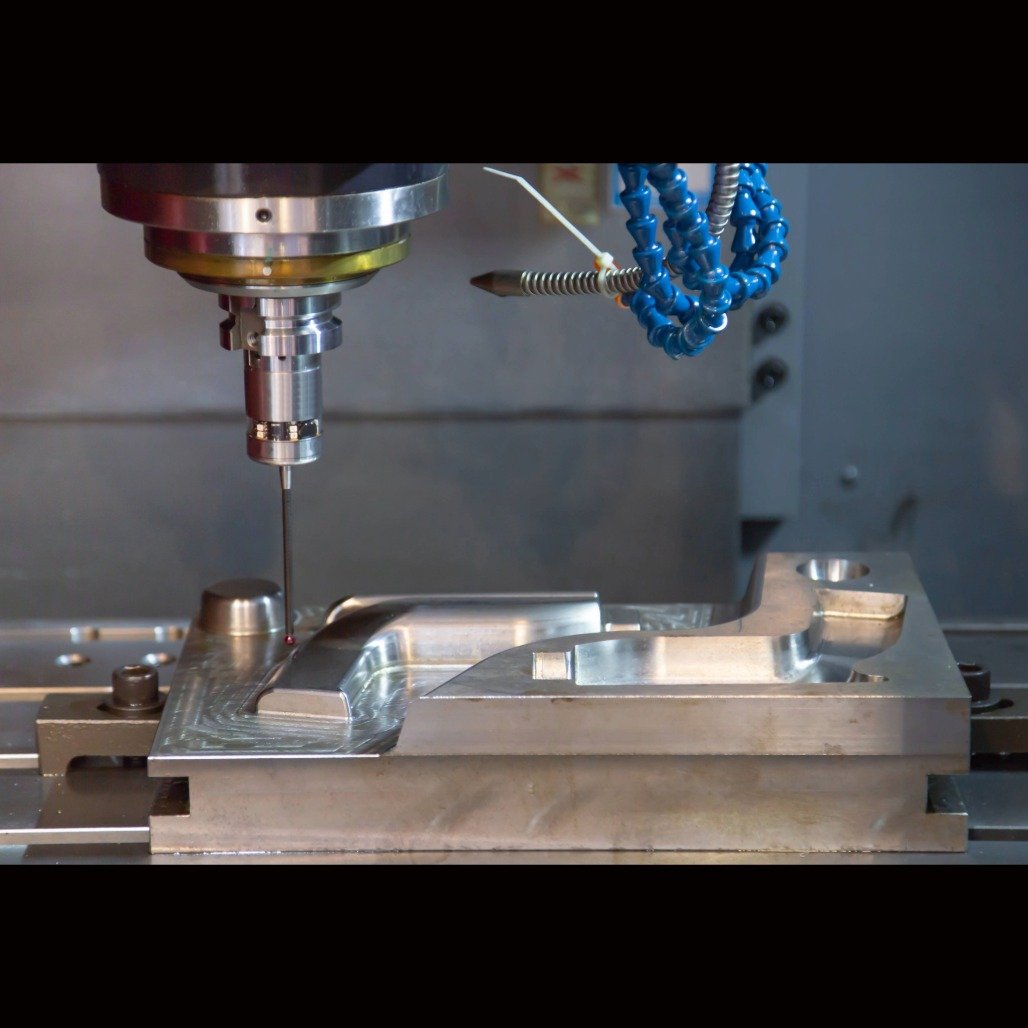
To prevent end mill pullout in ER32 collets, inspect the complete toolholding system before increasing tightening force or changing cutting conditions. The cause may be incorrect assembly, contamination, wear, a shank-size mismatch, or cutting forces the setup cannot hold.
Use a step-by-step process to check the fit and condition of each component, clean and reassemble the holder correctly, then test the setup. If the tool still moves, assess the cutting load and whether another holder style suits the operation.
Key Takeaways
- Confirm that the end mill has moved before treating chatter or vibration as pullout.
- Match the measured shank diameter to the collet’s specified collapsible range.
- Inspect the shank, collet, nut, and chuck for contamination or damage that could prevent even contact.
- Clean, reassemble, and test the holder using the manufacturer’s instructions, not a guessed torque value.
- If the grip interface checks out, review cutting load, tool stickout, workholding, and holder suitability.
Diagnose ER32 End Mill Pullout Before Changing the Setup
First, determine whether the end mill has shifted axially. A tool that moves in the collet needs a different diagnosis from one that shows runout, chatters, or vibrates without changing position. These problems can occur together, but they are not the same: runout is rotational variation, while pullout is axial tool movement.
What the slip pattern can tell you
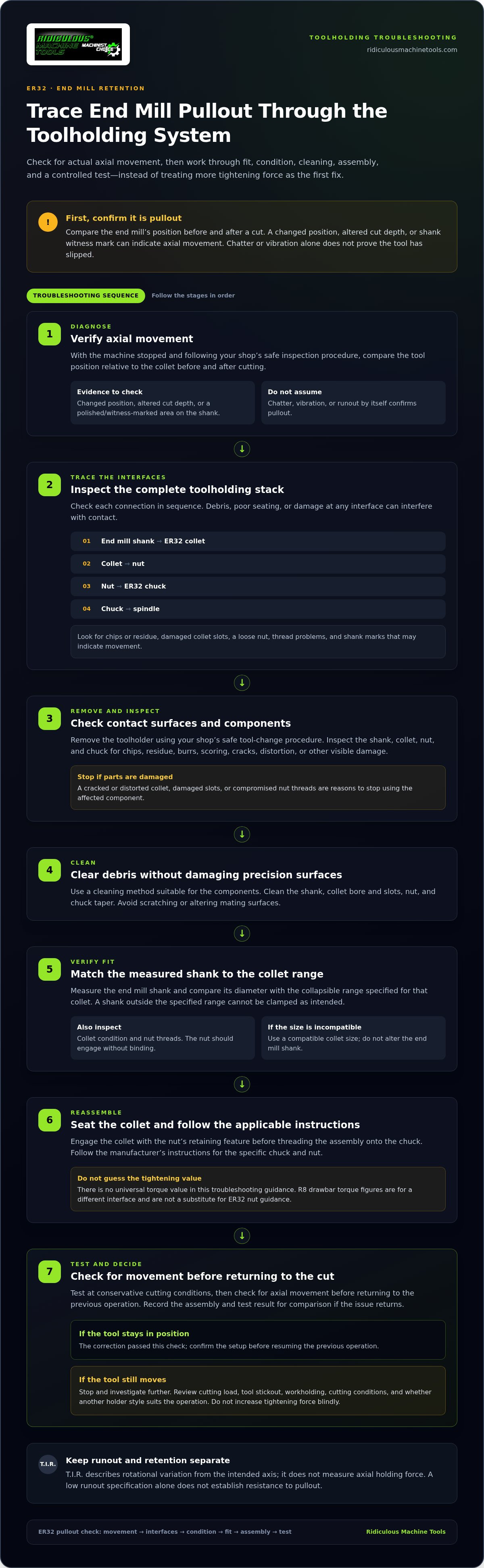
With the machine stopped and following your shop’s safe inspection procedure, compare the end mill’s position relative to the collet before and after a cut. A changed position, altered cut depth, or witness mark on the shank can indicate movement. Movement during a heavy engagement may point to a grip fault or a sudden increase in cutting load. Gradual creep over repeated passes can indicate marginal retention under sustained cutting forces.
Chatter and vibration alone do not prove pullout. Tool stickout, workholding, runout, and cutting conditions can also cause them. Look for physical evidence of axial movement before changing offsets or assuming the collet has slipped.
Start with the complete toolholding stack
Check each interface in sequence: end mill shank to ER32 collet, collet to nut, nut to ER32 chuck, and chuck to spindle. Chips or residue can interfere with seating, damaged collet slots can prevent even contraction, and a loose nut calls for an assembly and thread inspection rather than more tightening force. A polished area on the shank may also indicate movement.
The Collet reference describes how a collet grips tooling by contracting around it. For your setup, verify that the collet and chuck are compatible, then inspect their contact surfaces before changing the cut. Ridiculous Machine Tools offers ER spring collets in different precision levels and configurations. Review the applicable product details when selecting a replacement. Diagnosing the contact points first helps prevent end mill pullout in ER32 collets without making increased tightening force the default response.
How ER32 Collet Grip Depends on Fit, Seating, and Clamping
An ER32 setup grips an end mill when the nut draws a correctly seated collet into the chuck taper, contracting its slots around a compatible cylindrical shank. The parts need clean, even contact. Additional tightening force will not correct a mismatched collet, poor seating, or contamination between mating surfaces.
Collet and nut seating
Engage the collet with the nut’s retaining feature before threading the assembly onto the chuck. If the collet is not seated correctly, tightening may not draw it into the taper as intended, and the collet or nut may be damaged. Follow the instructions for the specific chuck and nut. Assembly steps and tightening values for another holder type, including R8 tooling, do not automatically apply.
The nut should thread onto the chuck without binding. Unexpected resistance can indicate damaged threads, cross-threading, or incorrect engagement. Stop and inspect instead of forcing the nut.
Shank fit and contact
Measure the end mill shank and compare its diameter with the collapsible range specified for the collet. A shank outside that range cannot be clamped as intended. Even when the diameter is within range, chips, oil film, burrs, scoring, or other damage on the shank, inside the collet, or on the chuck taper can interfere with contact or seating.
Keep runout and retention separate when diagnosing a setup. T.I.R. describes variation from the intended axis of rotation; it does not measure axial holding force. A low runout specification alone does not establish resistance to pullout. Harvey Performance explains how improper tool holding affects tool life, but assess retention separately from runout.
For compatible components, compare the specifications for the collet and chuck together in the ER collet chuck category. Correct fit and seating are the starting points for a repeatable setup and help prevent end mill pullout in ER32 collets.
ER32 Troubleshooting: Clean, Inspect, Reassemble, and Test
Follow the same sequence each time so the correction addresses an observed fault rather than a guess. Stop the machine before handling the toolholder and follow your shop’s safe tool-change procedure.
- Remove and inspect. Take out the toolholder and check the end mill shank, collet, nut, and chuck. Look for chips, residue, burrs, scoring, or damage that could affect contact.
- Clean mating surfaces. Use a cleaning method suitable for the components. Remove debris from the shank, collet bore and slots, nut, and chuck taper without scratching or altering precision surfaces.
- Verify fit and condition. Compare the measured shank diameter with the collet’s specified collapsible range. Inspect the nut threads and collet for cracks, distortion, or other visible damage.
- Reassemble and test. Seat the collet in the nut as directed by the manufacturer, install the assembly, and tighten it according to the applicable instructions. Test at conservative cutting conditions, then check for axial movement before returning to the previous operation.
Inspection findings that warrant component replacement
A cracked or distorted collet, damaged slots, or compromised nut threads are reasons to stop using the affected component. Appearance alone may not establish whether a collet still fits correctly, so use an appropriate fit or dimensional check when available. If the collet no longer fits the shank within its specified range, replace it with a compatible size rather than altering the end mill shank.
Verify the correction without guessing torque
ER32 nut tightening guidance depends on the tooling manufacturer and assembly. R8 drawbar torque figures apply to a different interface and should not be substituted for ER32 collet nut guidance. Avoid relying on a universal value. The overview What Is an ER Collet and How Does It Work? provides additional ER-system context. For compatible replacement components, review the ER spring collet options.
Record the assembly and test result so you can compare the setup if the problem returns. If the tool still moves after cleaning and correct assembly, stop and investigate further instead of increasing force blindly.
When to Adjust Cutting Conditions or Consider Another Holder
If the collet, nut, shank fit, and chuck pass inspection but the end mill still moves, review the cutting load and machine setup. Correct any fit or component fault before adjusting the cut. Changing feeds and speeds will not repair a damaged interface, and additional clamping force will not resolve chatter caused by a flexible setup.
Choose the next corrective action
Look for a pattern in when the movement occurs. Pullout during a particular engagement or heavier cut may indicate that cutting forces exceed what the setup can hold. Chatter or vibration without axial tool movement calls for a broader review, not an automatic diagnosis of collet slip. Where practical, change one factor at a time and check tool position after the test cut.
- Review radial and axial engagement, feed, and other cutting parameters for the operation.
- Reduce unnecessary tool stickout where access allows, since extended reach can increase deflection.
- Check workholding for movement and confirm that the workpiece is adequately supported.
- Consider whether the tool geometry or material is producing cutting loads the current holder setup cannot manage.
Keep the toolholding and workholding checks connected. A rigid toolholder cannot compensate for a shifting workpiece, and a stable fixture cannot correct a faulty tool-to-holder interface.
Keep the replacement decision specification-led
An end mill holder may suit an end mill with a compatible shank and holder interface, such as a suitable Weldon flat for set-screw retention. It uses a different holding method, not a universal upgrade. Before selecting one, confirm the tool shank, holder bore and interface, machine spindle connection, and operation requirements. Ridiculous Machine Tools' end mill holders are a separate toolholding category. Specifications vary by product, so use the applicable product page for model-specific details.
Use the inspection results to decide whether to correct the ER32 setup, revise the cut, or select another compatible holder. This approach helps prevent end mill pullout in ER32 collets without treating every chatter or vibration issue as a retention failure.
Make Toolholding Part of Process Planning
Review tool retention when an operation changes. A different end mill, longer reach, material, or toolpath can change the demands on the setup. Do not assume that a holder that worked for one cut will provide the same retention under different conditions. Recurring slip is a reason to reassess the application before the next production run.
A methodical check keeps the response tied to the cause. Select tooling for the shank, machine interface, and operation, then compare published specifications for the specific model. Ridiculous Machine Tools offers ER spring collets in multiple precision levels and configurations, with specifications that vary by model.
Review the product details for the collet that matches your application and setup.
Review ER spring collet options
Frequently Asked Questions
Can I use a smaller ER32 collet for a slightly larger end mill?
No. An ER collet contracts around the shank; it is not meant to expand to fit an oversized tool. Measure the end mill shank and compare it with the collet’s specified range. If the shank exceeds that range, the collet may not seat or clamp as intended, even if the difference appears small.
Should I tighten an ER32 collet nut harder to stop end mill pullout?
No. More force is not a reliable fix and may damage components or affect runout. To prevent end mill pullout in ER32 collets, use the tightening method and value specified by the toolholder manufacturer. If the nut meets unexpected resistance, stop and inspect the assembly and threads rather than forcing it. Torque guidance for a spindle drawbar or another holder does not automatically apply.
Can chatter cause an end mill to pull out of an ER32 collet?
Chatter can occur alongside pullout, but chatter by itself does not confirm that the tool has moved. After stopping the machine safely, check the tool position. If it is unchanged, investigate factors such as tool overhang, workpiece restraint, and engagement. If the tool has shifted, diagnose retention as a separate fault.
Should I roughen an end mill shank to improve ER32 grip?
No. Do not file, grind, knurl, or otherwise alter the shank to increase grip. Changing its diameter or surface can compromise its fit in the collet. Use an undamaged tool with a compatible shank, then correct the holder setup or choose a holding method suited to the operation.
When should I replace an ER32 collet instead of changing cutting parameters?
Replace the collet if inspection or measurement shows a crack, distortion, damaged slots, or a fit outside its specified range. If it appears sound but the tool repeatedly slips after correct assembly, check the chuck and nut and compare the setup with a known-compatible collet before adjusting the cut. Changing parameters will not correct a confirmed component or fit fault.
Article by
Ridiculous Machine Tools Technical Team
The Ridiculous Machine Tools Technical Team provides practical information about precision machine tooling, CNC tooling, workholding, and related manufacturing applications. RMT focuses on helping machinists, manufacturers, fabricators, and other customers understand tooling specifications, compatibility, selection, and proper application. Our technical content draws on product specifications, industry knowledge, and RMT's quality-control experience to provide clear, useful information for selecting and using machine tooling and workholding products.
Ridiculous Machine Tools — Machinist's Choice™