

How to Master Steel sealed vs rubber sealed collets for chip contamination for Better Results
Posted by RMT on Nov 7th 2026
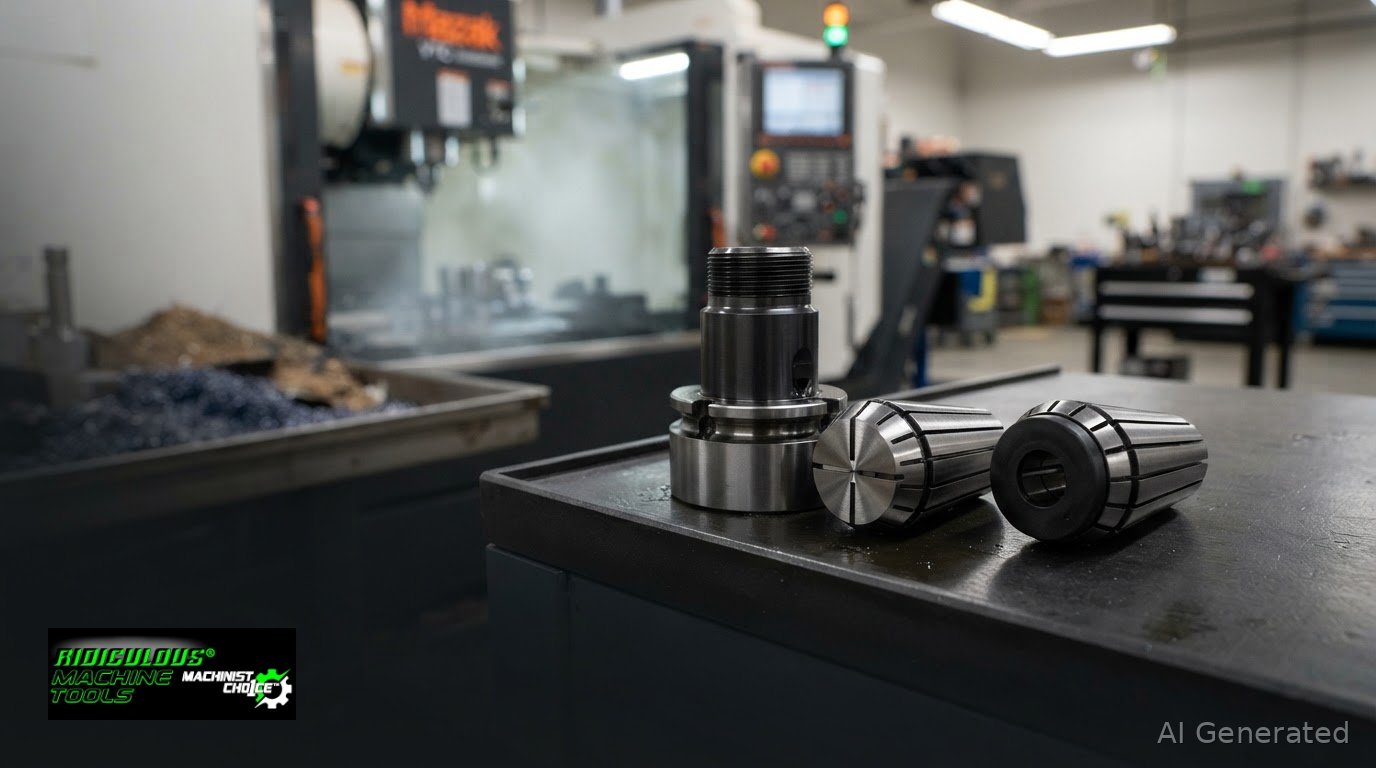
Steel sealed vs rubber sealed collets for chip contamination is not simply a choice of material: sealing design and job conditions matter. Steel Sealed ER Spring Collets are designed for coolant-through applications, while a rubber contact seal’s chip protection depends on its construction and fit.
Fine chips, abrasive dust, coolant, and spindle speed create different demands, so bearing-seal comparisons do not prove how a collet performs. This comparison explains how metal shields and rubber contact seals differ, what each design may mean for contamination control, and how to weigh dusty, wet, and high-speed conditions. Compatibility with the ER collet chuck and the application’s coolant setup also matters, not just the seal material.
Key Takeaways
- Match the seal design to the main exposure: dry debris, coolant, and high-speed operation place different demands on a collet.
- Consider chip shape and size, since fine abrasive particles can behave differently from larger, easily deflected chips.
- Assess contamination risk alongside friction and speed requirements rather than choosing by seal material alone.
- For coolant-through use, compare the collet’s intended function and compatibility with the ER collet chuck before selecting.
Metal shields versus contact rubber seals
Metal shields and rubber contact seals differ in how they block contaminants and affect friction. Bearing-seal figures describe bearings, not ER collet dimensions or performance.
Chip Entry by Type and Size
Chip entry depends on the seal opening, chip shape, and how the collet is used. A metal bearing shield may have an approximately 0.005-inch gap, but that figure does not establish a steel-sealed collet’s opening. Fine abrasive dust can pass through openings that stop larger chips. Curled or sharp chips can lodge at exposed interfaces, making the chip type as important as its size.
Seal type alone does not establish runout or clamping accuracy. Those depend on the collet, its fit in a compatible ER collet chuck, and correct seating and tightening. Check the applicable product specifications for stated T.I.R.; do not infer it from the seal material.
There is no single price comparison between steel and rubber seals. Price depends on the collet family, series, and size. Compare matching configurations and current product listings rather than treating seal material as the only cost factor.
Seals don’t set grip force or tool-change procedure. Correct collet seating and tightening create the grip; contamination on contact surfaces can interfere with seating and affect machining consistency. Metal shields generally create less friction than contact seals in bearing applications, but that comparison does not establish a collet’s allowable spindle speed. For collet compatibility, review the ER spring collet selection alongside the chuck specifications.
Metal detector response also depends on the product and packaging being inspected. Moisture can affect sensitivity, while flat rubber fragments may produce a weaker response than thicker pieces. Food processors need to assess the actual product and package; seal material alone does not predict detection.
Cleaning and Maintenance Against Chip Buildup
Cleaning means removing chips and residue from the collet and its seating surfaces before reassembly. Trapped debris can prevent proper seating and affect tool retention. During each tool change, inspect the slots, nose, and chuck contact surfaces. Remove visible chips using a suitable cleaning method, then verify that parts are clean and undamaged before use. Avoid forcing a chip past a seal.
Seal selection for dusty, wet, and high-speed conditions
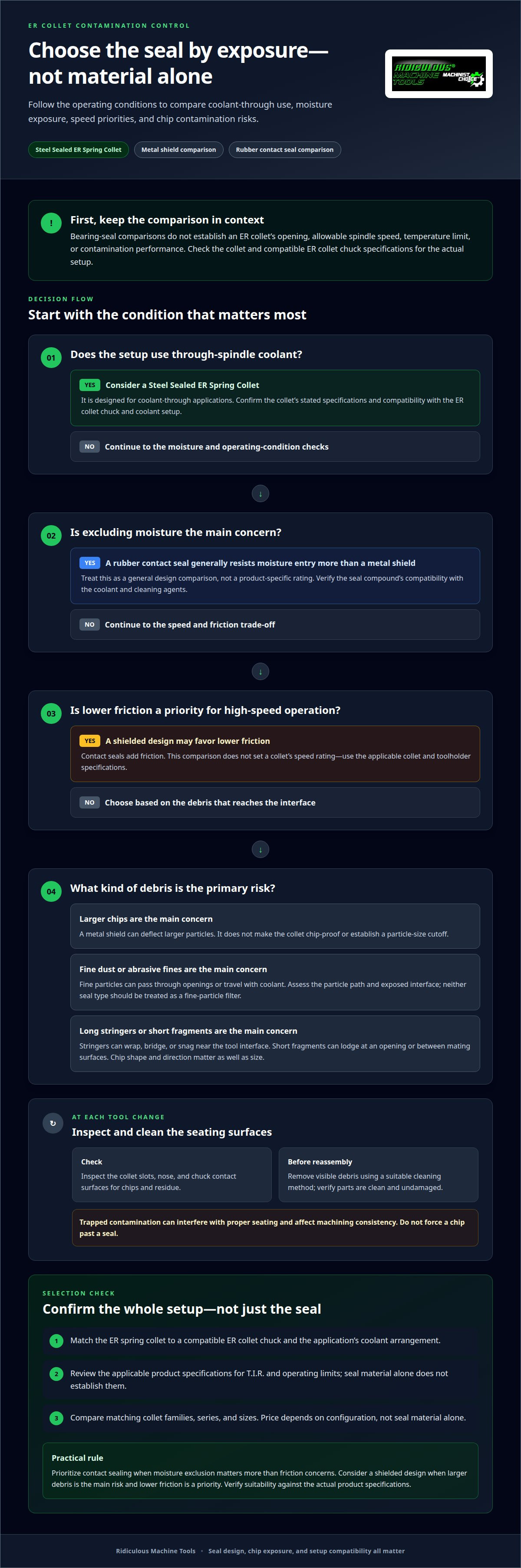
Choose based on the main exposure and operating speed, not seal material alone. Dust, coolant, abrasive fines, and spindle conditions place different demands on sealing and friction.
Protection from Fine Chips and Abrasive Particles
A steel shield can deflect larger particles, but it does not create the tight contact barrier of a rubber seal. Fine dust and abrasive particles can enter through openings, so shielded designs suit cleaner environments where larger debris is the primary concern. In chip-heavy operations, assess particle size, coolant direction, and how exposed the collet interface is during machining.
For wet conditions, a contact seal generally offers stronger resistance to moisture entry than a metal shield. For high-speed work, lower friction can favor a shielded design, while contact seals add friction. In bearing applications, contact-sealed bearings have speed ratings approximately 35% lower than open or shielded equivalents. That comparison is not a collet RPM rating; use the collet and toolholder specifications for the actual spindle setup.
Rubber Seal Resistance Limits
A rubber-sealed collet’s temperature, coolant, and chemical limits depend on its seal compound and product design. Bearing data cannot establish those limits for a collet. For reference, standard NBR rubber bearing seals are rated from −15°F to 220°F, but that range applies to bearing seals, not collets.
Coolant compatibility depends on the fluid and seal compound; chemical exposure can affect the seal’s flexibility and contact. Match the collet’s stated operating conditions to the coolant, cleaning agents, and process temperature. For through-spindle coolant, a Steel Sealed ER Spring Collet is intended for coolant-through applications, with operating suitability tied to its product specifications. The ER spring collet selection can help compare collet configurations for the job.
Use contact sealing when excluding contamination matters more than friction concerns. Favor a shielded design when larger debris is the main risk and speed is a higher priority. Confirm the seal design, compatible ER chuck, and operating limits together before choosing.
What types and sizes of chips can enter steel-sealed collets?
Chip entry depends on the collet’s seal geometry, chip shape, and how debris reaches the tool interface. “Steel-sealed” describes a design, not a guaranteed particle-size cutoff. Do not treat a steel-sealed collet as a fine-particle filter or chip-proof enclosure.
Fine dust and abrasive particles can travel with coolant or settle around exposed openings. Small fragments from milling, drilling, or grinding may reach those openings if chip flow carries them there. Their risk comes from their ability to migrate into narrow spaces, not from a universal size threshold. The specific path depends on the collet design and surrounding setup.
Long stringers behave differently from compact chips. A curled aluminum chip can catch on an exposed edge or wrap around nearby tooling, while short steel fragments may be swept toward an opening by coolant flow. Larger chips may be deflected, but a lodged fragment can still interfere with seating during a tool change. Chip shape and direction of travel matter as well as particle size.
- Fine dust: Can settle on the collet nose and enter exposed gaps.
- Abrasive fines: Can circulate with coolant and contaminate contact surfaces.
- Short fragments: Can lodge at an opening or between mating surfaces.
- Long stringers: Can wrap, bridge, or snag near the tool interface.
In aluminum milling, inspect for curled stringers and fine residue; in grinding, look for abrasive fines around the nose and slots. Remove visible debris before seating the collet, then check that mating surfaces are clean. Coolant-through capability controls coolant delivery through the tooling path; it does not establish protection from every chip type. Base the decision on the actual debris pattern, coolant direction, and collet geometry, rather than assuming steel construction blocks all particles.
Do steel-sealed collets protect against fine chips, dust, and abrasive particles?
Steel-sealed collets can reduce exposure to larger debris, but they are not a complete barrier against fine contamination. Their practical value depends on the machining process and how chips move around the toolholder. To assess steel sealed vs rubber sealed collets for chip contamination, start by identifying where particles form, how they travel, and where the collet is exposed.
Consider the full machining cycle, not just the cutting pass. Drilling can produce chips that collect around the tool, while interrupted milling can send debris in changing directions. Vertical and horizontal spindles also present different exposure patterns. These details help distinguish a localized shielding need from a process that regularly directs debris toward the collet.
Assess chip control separately from seal selection. Review enclosure panels, chip guards, nozzle direction, and evacuation paths as part of the same evaluation. If debris repeatedly reaches the toolholder, improving the machine’s chip-management setup may reduce exposure before seal choice becomes the main variable. Metal covers can suit cleaner conditions where larger particles are the primary concern.
- Map the process: Note where chips form during each operation.
- Review tool orientation: Consider spindle position and the workpiece’s location.
- Check chip control: Review guards, enclosure openings, and evacuation flow.
- Compare seal needs: Weigh contamination exposure against speed and friction demands.
Fine abrasive material deserves particular attention in grinding or finishing operations. Small particles can remain on nearby surfaces even after visible chips are removed. Focus the assessment on the actual operation and the collet’s intended function. A coolant-through collet addresses coolant delivery through the tooling path; that function alone does not establish exclusion of external dust or chips.
Use observed exposure to guide the selection, then keep the surrounding chip-control setup consistent. That makes seal choice one part of a sound process decision.
Compare ER spring collet configurations
Ridiculous Machine Tools: Horizontal Toggle Clamps
Ridiculous Machine Tools offers Horizontal Toggle Clamps for securing workpieces or fixture components during shop operations. Collet seals control contamination around tooling; toggle clamps meet a separate need by holding parts in position. They may suit setups where a low-profile handle helps keep the clamp clear of nearby equipment or work areas.
For other fixture arrangements, Ridiculous Machine Tools also offers Latch Toggle Clamps, Vertical Toggle Clamps, and Push-Pull Straight Line Toggle Clamps. Choose a clamp type based on force direction, mounting layout, and required clearance. Review each model’s specifications to match its configuration and holding capacity to the application.
Visit the Horizontal Toggle Clamps category or contact Ridiculous Machine Tools to explore workholding options.
Make the Next Tooling Decision Easier
Make the seal decision a repeatable setup criterion. Record the relevant job conditions, who approved the selection, and what changes would trigger a review. This keeps future tooling decisions tied to documented requirements rather than habit.
For the next job review, compare documented requirements with the current tooling configuration before making a change. A clear standard helps operators apply the same decision logic across similar setups. The steel sealed vs rubber sealed collets for chip contamination comparison then becomes part of a practical process record, not a one-time choice.
Include that record in normal setup planning so each tooling change starts with a clearer basis for evaluation.
Frequently Asked Questions
How Do You Select the Right Seal for the Application?
Start with the job record, not a general preference for one seal style. Record the collet family, ER series, tool shank diameter, holder identification, coolant method, and operation. This helps prevent choosing a replacement based on diameter alone. If a job moves between machines, compare setup details first; matching the tooling interface matters as much as matching the nominal tool size.
How do steel-sealed and rubber-sealed collets differ in chip contamination protection?
For a shop, the useful comparison is how each configuration behaves in its tooling setup, not how bearing catalogs compare. Evaluate the collet and compatible chuck as a matched assembly. Changing the chuck, nut, or tool at the same time makes it harder to identify what caused a change in chip residue or setup behavior. Record configuration changes in the job documentation.
How effective are rubber seals at preventing chips and coolant from entering collets?
A contact seal may help restrict entry at the sealing interface, but it does not clean coolant or protect every surface around the spindle. In coolant-fed operations, distinguish external splash from coolant traveling through the tooling passage. These are separate paths. Document where residue appears, then review the seal and coolant arrangement as distinct parts of the setup.
When should a shop choose steel-sealed or rubber-sealed collets for a machining application?
Choose after comparing configurations on the same representative job. Keep the machine, tool, workpiece, and cutting conditions consistent, then document any observed changes before adopting a standard. This gives operators a repeatable basis for future tool changes. For production work, include the selected collet and holder identifiers on the setup sheet so replacements preserve the qualified tooling combination.
How do steel-sealed and rubber-sealed collets compare in runout and clamping accuracy?
Seal type alone does not determine runout or clamping accuracy. These depend on the collet, its fit in a compatible ER chuck, and correct seating and tightening. Check product specifications for T.I.R.
What are the temperature, coolant, and chemical resistance limits of rubber-sealed collets?
Limits depend on the collet’s seal compound and product design. Check its stated operating conditions against the coolant, cleaning agents, and process temperature; bearing-seal ratings do not establish collet limits.
Article by
Ridiculous Machine Tools Technical Team
The Ridiculous Machine Tools Technical Team provides practical information about precision machine tooling, CNC tooling, workholding, and related manufacturing applications. RMT focuses on helping machinists, manufacturers, fabricators, and other customers understand tooling specifications, compatibility, selection, and proper application. Our technical content draws on product specifications, industry knowledge, and RMT's quality-control experience to provide clear, useful information for selecting and using machine tooling and workholding products.
Ridiculous Machine Tools — Machinist's Choice™