
How to Master Er40 collet chuck for heavy shank drilling operations for Better Results
Posted by RMT on Nov 6th 2026
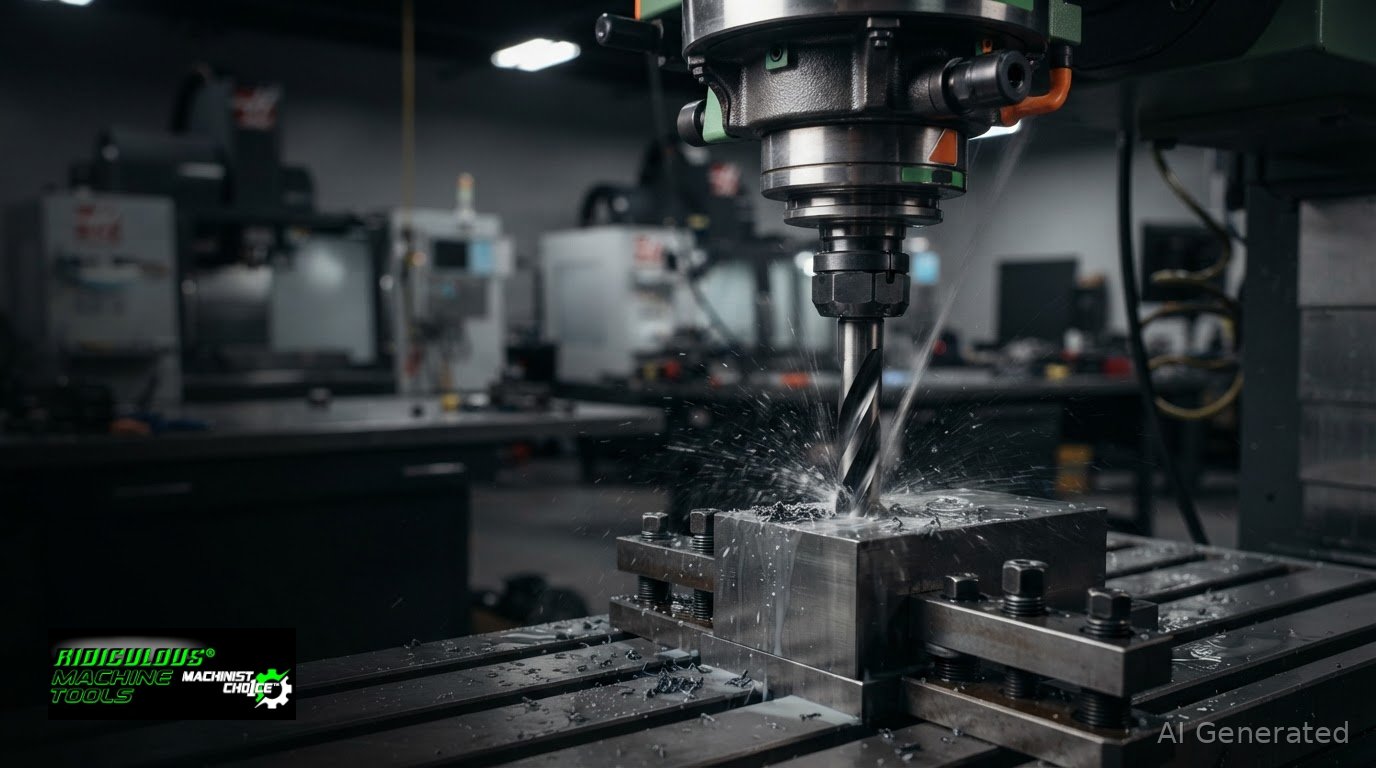
The larger collet isn’t automatically the safer choice for a heavy drill: the shank must fit the selected collet’s range, and the holder must suit the spindle and cutting load. An ER collet contracts inside a compatible chuck when its nut is tightened; ER40’s stated clamping range is 3 mm to 26 mm, so selecting an ER40 collet chuck for heavy shank drilling operations starts with matching the collet to the tool shank, not simply choosing the largest available size.
This guide explains how to assess shank fit, cutting forces, runout, and spindle condition when comparing chuck and kit options for drilling and related operations.
Key Takeaways
- Match the ER40 collet to the drill’s shank diameter; the stated clamping range is 3 mm to 26 mm.
- Consider tool diameter, cutting forces, and operation type when deciding whether an ER40 setup suits the drilling or reaming task.
- Assess runout across the spindle, chuck, collet, and tool so you can identify where vibration or accuracy problems may originate.
- Compare chuck and kit contents against your spindle interface and required collet sizes before selecting a setup.
Choosing a collet based on shank diameter and cutting forces
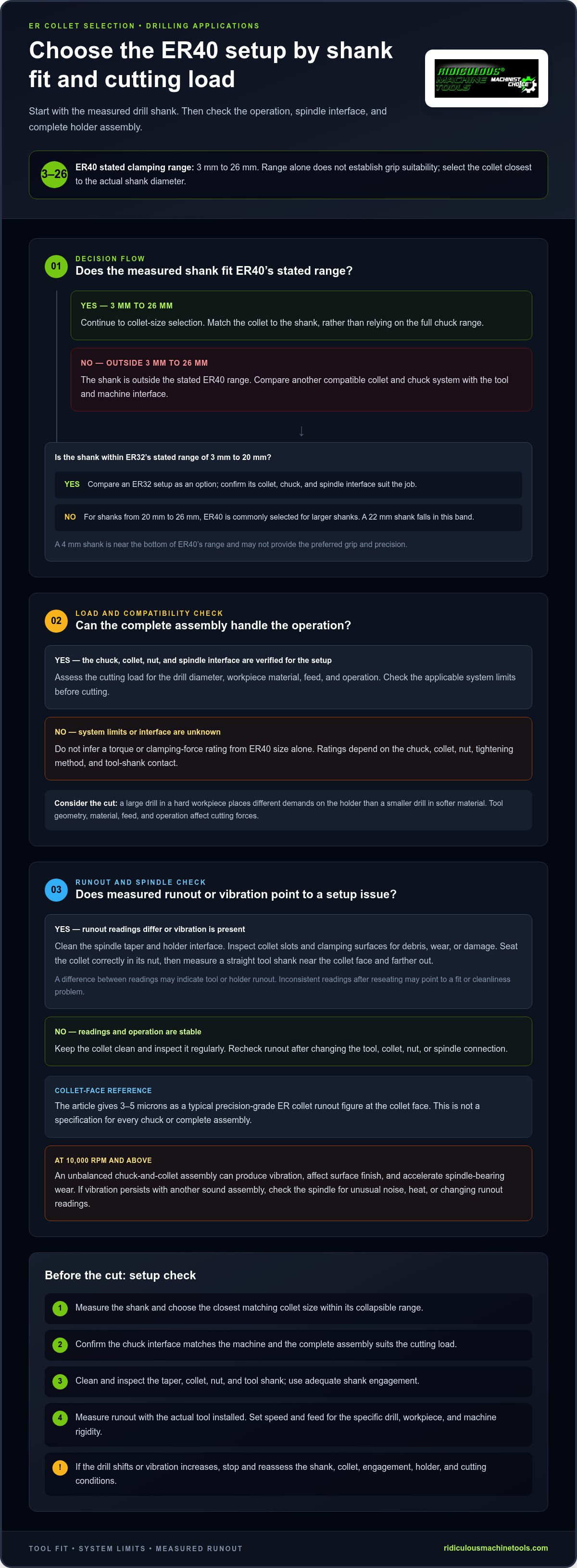
Choose the ER40 collet by matching its bore to the drill’s shank and operation. The stated ER40 clamping range spans 3 mm to 26 mm, but range alone doesn’t determine grip suitability.
Maximum Shank Diameter
The maximum shank diameter an ER40 collet chuck can hold is 26 mm. This upper limit helps determine whether the shank fits the system, but the collet must also match the actual diameter closely. ER40 collets are commonly selected for larger shanks, particularly sizes from 20 mm to 26 mm. For a 4 mm shank, ER40 is near the bottom of its range, so it may not provide the preferred grip and precision.
Each collet’s collapsible range matters. Select the collet closest to the tool diameter rather than relying on the full chuck range. ER32 covers 3 mm to 20 mm, so a shank within that range may fit an ER32 setup instead. The ER collet chuck options should be matched to the machine interface and the intended collet series.
Torque and Clamping-Force Ratings
ER40 chucks don’t share one universal maximum torque or clamping-force rating. These values depend on the chuck, collet, nut, tightening method, and tool-shank contact. Don’t infer a numeric rating from the ER40 size alone. For a heavy drilling cut, the relevant combination must resist rotation and axial movement without exceeding the tooling system’s stated limits.
Cutting forces also change with drill diameter, workpiece material, feed, and operation. A large drill in a hard workpiece places different demands on the holder than a smaller drill in a softer material. The ER40 collet chuck for heavy shank drilling operations must therefore be assessed as a complete assembly, not by diameter capacity alone.
Match the Collet to the Cutting Load
Start with the measured shank diameter, then choose a collet whose range includes that size. A close fit helps distribute contact around the shank; a poor fit can compromise holding and concentricity. For example, a 22 mm shank falls within ER40’s 20 mm to 26 mm heavy-shank selection band.
Next, consider the operation’s cutting load. Drilling depth, tool geometry, material, and feed all affect the forces on the holder. Confirm that the chuck, nut, collet, and spindle interface are suitable for the setup before cutting.
Collet quality, runout, and spindle health
Runout is the variation between a rotating tool’s actual axis and its intended axis. Precision-grade ER collets typically deliver 3-5 microns of runout at the collet face; this is a typical collet figure, not a specification for every chuck or complete assembly. The spindle taper, holder, collet, nut, and tool all affect measured runout. A precise collet cannot correct contamination or damage elsewhere in the spindle-to-tool interface.
Check the assembly in stages. Clean the spindle taper and holder interface, then inspect the collet slots and clamping surfaces for debris, wear, or damage. Seat the collet correctly in its nut before installing it in the chuck. Measure a straight tool shank near the collet face, then farther out. A difference between readings may indicate tool or holder runout; inconsistent readings after reseating may point to a fit or cleanliness problem.
Spindle condition matters at speed. At 10,000 RPM and above, an unbalanced chuck-and-collet assembly can produce vibration, degrade surface finish, and accelerate spindle-bearing wear. If vibration changes after replacing the tool or reassembling the holder, inspect those components and their seating. If vibration persists with another sound assembly, check the spindle for unusual noise, heat, or changing runout readings.
ER collets can last through thousands of clamping cycles with proper care, but inspect them regularly for wear. Look for damaged slots, uneven contact marks, or chips that prevent full seating. Keep each collet clean, and avoid clamping a shank over only part of its gripping length. Short engagement can reduce accuracy and holding stability. For heavy drilling, measure runout with the actual tool installed, because a reading at the collet face alone does not describe the complete cutting setup. Recheck after changing the tool, collet, nut, or spindle connection.
ER40 heavy-duty drilling and reaming applications
ER40 collet chucks are used for drilling, reaming, tapping, and boring. Their larger capacity and clamping force can suit heavy-duty work, but tool geometry, material, and cutting load still determine the setup. A large drill in a tough workpiece places different demands on the holder than a reamer finishing a prepared hole.
An ER40 collet grips a cylindrical shank around its circumference. A Weldon side-lock holder uses a set screw against the tool’s Weldon flat, providing a mechanical stop against rotation. The ER40 system can suit round shanks and offers concentric gripping; a side-lock holder may suit a Weldon-shank drill when resistance to rotation is a priority. Compare the tool shank and operation before choosing.
For installation, clean the taper, collet, nut, and tool shank, then inspect them for chips or damage. Engage the collet in the nut before threading the assembly onto the chuck. Insert the drill with adequate shank engagement, then tighten the nut using the specified method and torque for that chuck system. ER40 size alone does not define a universal tightening torque.
Drill speed and feed depend on tool diameter, material, drill geometry, and machine rigidity. Set them for the specific drill and workpiece rather than relying on a generic ER40 value. Maintain coolant delivery appropriate to the operation, especially in deep holes where chip evacuation and heat control affect cutting stability. Consistent feed also helps avoid sudden load changes.
High torque or interrupted cuts can cause a tool to slip, pull out, or load the collet unevenly. Interrupted entry, cross-holes, and uneven surfaces create changing forces that challenge the grip. Stop if the drill shifts or vibration increases. Inspect the shank and collet, then reassess the holder, engagement, cutting parameters, and operation before restarting. Reaming also requires stable alignment, since runout can affect hole size and finish.
ER40 collet chuck sets and kits
A useful ER40 setup is more than a chuck paired with a collection of collets. The kit should cover the shank diameters used in your drilling work, match the machine interface, and include compatible components. Check the chuck, nut, collet series, and included sizes together. A set with gaps around your common drill shanks may leave the most important tools without a close-fitting collet.
No single brand or model is recommended for every heavy drilling application. Compare the chuck’s published specifications for runout, balance, coolant configuration, and spindle interface, then match them to the machine and operation. A product name or ER40 marking alone doesn’t establish suitability for a particular load or speed. For a demanding cut, assess the complete holder assembly and the drill’s shank fit.
ER40 identifies the collet system, not the machine-side spindle taper. The correct interface depends on the machine and holder configuration. Check the taper, retention arrangement, drawbar connection, and coolant requirements against the machine before purchasing. A CAT40 or CAT50 spindle interface, for example, must match the corresponding machine interface; these taper sizes are not interchangeable.
Before choosing a kit, compare its contents with your actual tooling inventory:
- List the drill shank diameters used most often, including inch and metric sizes.
- Confirm each included collet’s stated clamping range fits the intended shank.
- Check that the chuck’s taper and retention details match the machine.
- Review whether the kit includes the nut and other components needed for assembly.
For shops using only a few drill diameters, a chuck with selected matching collets can avoid unused sizes. A broader set can make sense when operations regularly change tools or shank diameters. The right ER40 collet chuck kit is the one whose verified contents and interface fit the job, not simply the kit with the most pieces.
Compare ER collet chuck options
Ridiculous Machine Tools: Horizontal Toggle Clamps
Ridiculous Machine Tools offers Horizontal Toggle Clamps for securing workpieces in fixtures, an important part of a drilling setup. A stable workpiece helps maintain its position under cutting forces. Choose a clamp based on the fixture layout, workpiece shape, and access needed around the hole. A horizontal design may suit setups where handle clearance is important.
For other fixture arrangements, Ridiculous Machine Tools also offers Vertical Toggle Clamps, Latch Toggle Clamps, and Push-Pull Straight Line Toggle Clamps. Each style applies force differently, so match its configuration to the workpiece and mounting points. Explore Horizontal Toggle Clamps for workholding applications that need a low-profile handle position.
Visit ridiculousmachinetools.com to review the available clamp styles or contact Ridiculous Machine Tools with your tooling questions.
Put Your Tooling Decision Into Practice
Before the next production run, record the holder configuration, drill, workpiece material, and operation sequence. A repeatable setup record helps operators identify changes between jobs and gives programmers a clear reference when revising a process. Include your shop’s pre-cut checks, such as verifying tool seating and confirming that the workpiece is secure.
For an ER40 collet chuck for heavy shank drilling operations, treat the first run as a chance to assess the complete setup under the actual machining conditions. Observe chip formation, sound, and finish, then document useful adjustments for the next job. That record can help your team make informed tooling decisions without relying on memory alone.
Apply the same disciplined approach to each setup, and refine the process as your machining requirements change.
Frequently Asked Questions
What Is an ER Collet?
An ER collet is a removable, slotted workholding component in the ER toolholding system. Its slots let the body contract evenly as the nut draws it into the chuck’s internal taper. The series designation matters: an ER40 collet belongs in a compatible ER40 chuck, not an ER32 chuck. Collets also differ by bore size and precision grade, so match the component to the tool and application.
What Is the Runout Tolerance of ER Collet Chucks?
There is no single runout tolerance that applies to every ER collet chuck. A published value may describe the chuck taper, internal bore, collet, or assembled tool, and these measurements are not interchangeable. For a drilling setup, compare the stated measurement location with your inspection method. Check the complete spindle-to-tool assembly, since a chuck specification alone does not describe total tool runout.
Can ER Collets Hold Both Metric and Inch Tools?
Yes. Metric and inch tools can be held when their measured shank diameters fall within the selected collet’s specified range. The unit on a tool drawing does not change the collet series, but it can complicate size selection if the shank is measured or rounded incorrectly. Measure the shank itself and choose a collet sized for that diameter rather than relying only on the tool’s nominal designation.
What Is the Difference Between ER32 and ER40 Collet Chucks?
ER32 and ER40 are different chuck and collet series, with different component sizes and capacity. ER40 accommodates larger shanks; ER32 can be more appropriate for tools that fit its capacity and machine envelope. Selection also depends on the machine’s spindle interface, holder clearance, and the tool’s diameter and length. A larger series doesn’t by itself establish better results for every drilling job.
Which ER40 Collet Chuck Designs Are Best for Heavy Shank Drilling?
No single design is best for every heavy drilling setup. Compare the chuck’s machine interface, published runout and balance information, and coolant configuration with the drill, workpiece, and operation. If coolant must pass through the holder, select a compatible coolant-through arrangement. For a specific ER40 model, judge its documented specifications against the machine and process rather than the series name alone.
How Do ER40 Collet Chuck Runout and Concentricity Affect Drilling Accuracy?
Runout can cause a drill to rotate off its intended axis, while concentricity describes how closely the tool aligns with that axis. This may affect hole location, diameter, and finish, and can load the drill lips unevenly. To isolate the source, compare readings at the holder and tool shank, then inspect the drill itself. A hole measurement alone cannot identify which component introduced the error.
Article by
Ridiculous Machine Tools Technical Team
The Ridiculous Machine Tools Technical Team provides practical information about precision machine tooling, CNC tooling, workholding, and related manufacturing applications. RMT focuses on helping machinists, manufacturers, fabricators, and other customers understand tooling specifications, compatibility, selection, and proper application. Our technical content draws on product specifications, industry knowledge, and RMT's quality-control experience to provide clear, useful information for selecting and using machine tooling and workholding products.
Ridiculous Machine Tools — Machinist's Choice™