

Gambar arbor: Everything You Need to Know
Posted by RMT on Nov 4th 2026
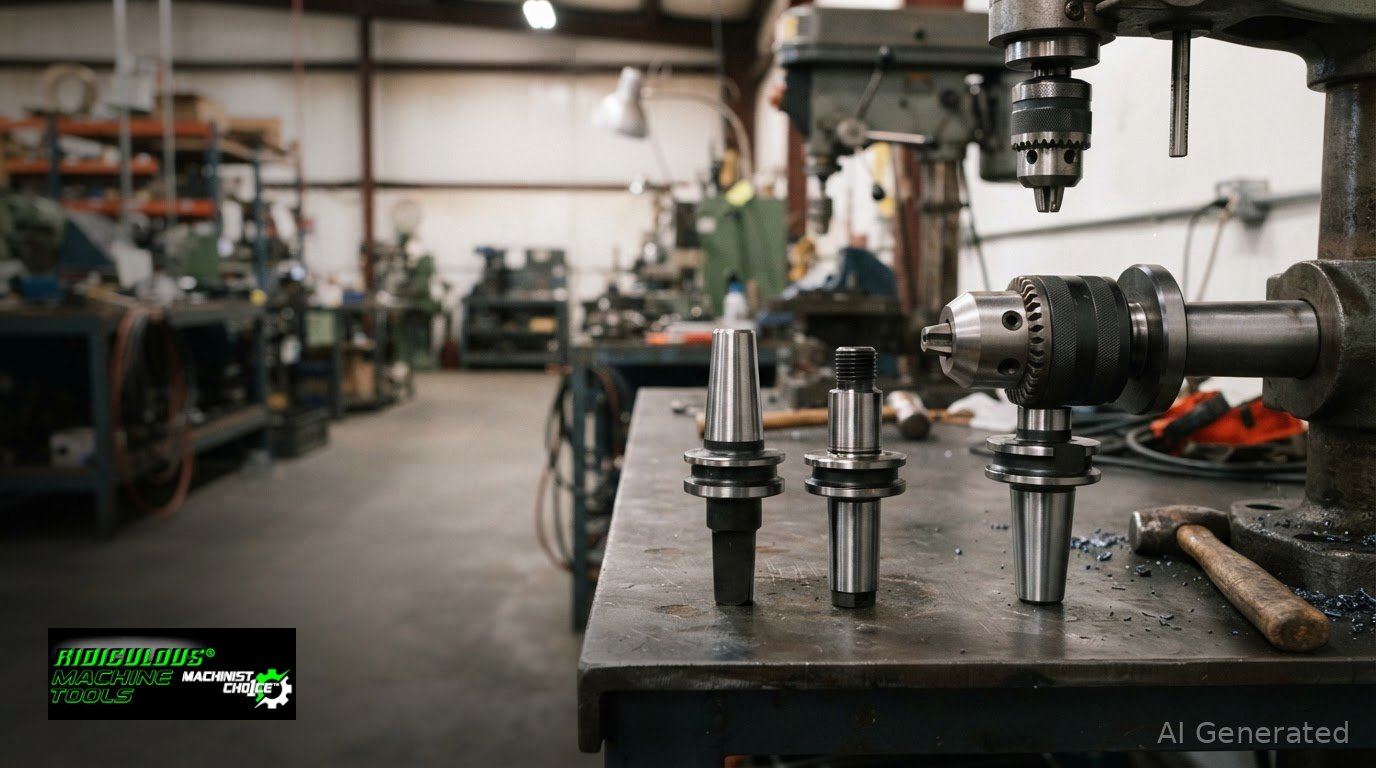
A drill chuck that fits the drill does not automatically fit the machine. The main drill chuck arbor types include Morse taper, R8, and straight shanks, with Jacobs Taper or threaded connections used at the chuck end. Correct selection depends on identifying the interfaces at both ends, not judging a replacement by appearance or chuck capacity alone. A mismatch can prevent proper seating and disrupt a setup.
Begin with the machine’s spindle or socket information, then identify the chuck’s mount and the drilling work it needs to handle. These details help narrow the arbor configuration and show which specifications matter. This guide compares common drill chuck arbor types, explains size markings, and covers practical checks for matching a chuck, arbor, and spindle. Use it to assess an existing setup or choose a compatible replacement.
Key Takeaways
- Identify the spindle-side shank first: Morse taper, R8, and straight shanks fit different machine interfaces.
- Match the chuck-side connection to its arbor, including the correct Jacobs Taper size or threaded mount.
- Compare the arbor’s two interfaces and the chuck’s capacity before selecting a replacement or new setup.
- Clean mating surfaces and seat tapered connections squarely to support proper fit and alignment.
Shank types, including Morse taper, R8, and straight shank
The main drill chuck arbor types are Morse taper, R8, and straight shank. Each identifies the machine-side connection. At the chuck end, Jacobs Taper or threaded mounts connect the chuck. The full assembly must match both interfaces, not just the machine spindle.
Shank design affects how an arbor seats and transfers load. Runout, rigidity, and drilling accuracy depend on the assembled components, their fit, and their condition. An arbor designation alone does not establish the runout of the chuck-and-spindle setup.
- Morse taper: Common on drill presses and lathe tailstocks, this self-locking taper transmits torque through matching surfaces. Larger drill presses may use Morse taper #2, #3, or #4. Clean the socket and shank, align them, engage the tang with its slot when present, and seat straight. Remove the arbor with the correct drift wedge through the machine’s drift slot.
- R8: This shank fits an R8 spindle, often found on milling machines. Match the spindle interface exactly. A Morse taper shank will not substitute for R8 tooling, even if its diameter appears close.
- Straight shank: This cylindrical shank fits a compatible chuck, collet, or holder. Its diameter must suit the receiving interface. A compatible ER collet chuck can hold a suitable straight shank when the collet range matches.
Integrated-shank drill chucks combine chuck and arbor as one piece, rather than a two-piece press-fit assembly. That construction removes the separate tapered chuck-to-arbor joint and can provide greater rigidity and concentricity than a press-fit mount. Integrated units are available with MT3, MT4, R8, CAT30, and CAT40 tapers for compatible machines.
Choose the shank to match the machine interface first. Then match the chuck mount and consider the runout, rigidity, and drilling accuracy required for the operation. A one-piece unit suits setups that need its specific spindle taper and chuck configuration, while a removable arbor lets you change components separately.
Mount types, including Jacobs taper and threaded
The chuck-side mount and machine-side connection are separate interfaces. Identify both before choosing an arbor, then assemble it using the method appropriate to its mount design.
Jacobs Taper and Threaded Mounts
A Jacobs Taper is a self-holding connection between a chuck and an arbor. Threaded mounts join components through matching internal and external threads. For a threaded arbor, confirm the chuck-side thread and machine-side connection separately. The machine end may use a different interface, so a matching chuck thread alone does not confirm spindle fit. Check the thread form, size, and engagement details against component markings or documentation.
Tapered Arbor Chuck Installation
For a Jacobs Taper chuck, clean the mating surfaces and remove oil, grease, or protective coatings. Align the chuck and arbor, then seat them with an arbor press, keeping both parts supported. To separate a press-fit chuck, use a suitable removal method that supports the chuck and applies controlled force to the arbor. Remove Morse Taper arbors through the machine’s drift slot with a correctly sized drift wedge.
Jacobs and Morse Taper Dimensions and Roles
Jacobs Taper connects the chuck to the arbor; Morse Taper commonly connects the arbor to the spindle. They use distinct size systems. Listed Jacobs Taper dimensions include:
- Size 0: 0.250". Size 1: 0.384".
- Size 2: 0.559". Size 3: 0.811".
- Size 4: 1.124". Size 5: 1.413".
- Size 6: 0.676". Size 33: 0.624".
These values identify Jacobs Taper dimensions, not Morse Taper dimensions. Choose the Morse Taper to match the machine socket designation, then match the chuck end to its Jacobs Taper or thread. Do not infer one interface from the other.
A taper dimension chart covers Morse tapers, Jacobs tapers, CAT tapers, R8 shanks, and other common spindle and arbor styles; listed Jacobs sizes 0-4 measure 0.250, 0.384, 0.559, 0.811, and 1.124 inch, respectively.
Arbor mount sizes
Arbor sizing involves two separate interfaces: the machine-side shank and chuck-side mount. Match each to its mating socket, spindle, or chuck. A chuck’s drilling capacity does not identify either arbor interface. For example, a chuck that accepts a 1/2" drill shank still needs a compatible arbor mount on both ends.
Morse Taper sizes use designations such as MT2, MT3, and MT4. Larger drill presses may use Morse Taper #2, #3, or #4. These are taper size identifiers, not interchangeable labels. Match the arbor’s Morse Taper to the spindle or tailstock socket designation. A Morse Taper #3 arbor will not correctly seat in an MT2 socket.
R8 is another spindle interface, used only with a compatible R8 spindle. CAT30 and CAT40 are separate machine-tool taper designations. Integrated chuck-and-arbor units are available in MT3, MT4, R8, CAT30, and CAT40 configurations. The machine interface determines which designation fits, not the chuck’s capacity.
Jacobs Taper and threaded mounts identify the chuck-side connection. Match the Jacobs Taper size or thread to the chuck’s internal mount. A Jacobs Taper number does not indicate a Morse Taper size. For a threaded connection, confirm the thread form and dimensions specified for both the chuck and arbor before assembly.
Use this sequence to identify the required mount sizes:
- Read the spindle or socket designation, such as R8 or MT3.
- Identify the chuck’s Jacobs Taper or threaded mount.
- Match both interfaces to the corresponding ends of the arbor.
- Compare the arbor shank diameter with the receiving holder or collet capacity.
- Check chuck capacity separately against the drill shank diameter.
Keep three measurements distinct: chuck capacity, arbor shank diameter, and taper or thread size. Confirming each helps prevent a mismatch, even when the chuck and machine appear similar in scale.

Matching a chuck to an arbor or spindle
A compatible setup matches the spindle, arbor, and chuck interfaces. A Morse Taper spindle needs an arbor with a matching Morse Taper; the arbor’s opposite end must fit the chuck’s Jacobs Taper or thread. The right chuck capacity alone cannot make mismatched interfaces fit.
You can use a drill chuck arbor in a milling machine for drilling if its shank matches the spindle and the assembly suits the operation. The risk comes from a poor fit or using a drill chuck for side-loaded milling: the tool may shift, runout may increase, or the connection may loosen. Use a milling-rated holder for milling cutters.
Choose the assembly by checking its interfaces and intended duty:
- Identify the spindle connection, such as R8, Morse Taper, or CAT40.
- Match the arbor’s machine-side shank to that interface.
- Match the arbor’s chuck-side Jacobs Taper or thread to the chuck.
- Confirm the drill diameter falls within the chuck’s stated capacity.
- Compare the required runout, torque demand, work material, and tool-change frequency.
Each check serves a different purpose. Capacity refers to the drill shank, while spindle compatibility depends on the arbor’s machine end. Runout matters when hole location or finish depends on tool concentricity. Torque and material demands affect chuck selection, while frequent tool changes may favor a keyless chuck if its design suits the job.
Inspect the assembled parts before operation. Confirm that mating tapers are clean and fully engaged, or that threaded parts are joined correctly. A premium chuck cannot compensate for excessive runout or a poor fit elsewhere in the assembly. If the machine requires tighter runout control, choose an arbor with a stated runout specification and consider the chuck and spindle interfaces as one system.
For drilling on a milling machine, match the spindle interface first, then select an arbor and chuck suited to the drilling load. Don’t assume an arbor suitable for a drill press also fits an R8 or CAT40 spindle.
Browse machine-tool accessories
Ridiculous Machine Tools: Horizontal Toggle Clamps
Ridiculous Machine Tools offers horizontal toggle clamps for workholding needs that may accompany a drilling setup. An arbor matches the chuck to the spindle; a toggle clamp secures a workpiece or fixture. They have different functions, so choose each component for its own interface and application.
Ridiculous Machine Tools also offers latch, vertical, and push-pull straight-line toggle clamps for other manual workholding configurations. Compare the clamp style with the fixture layout and the direction of restraint required. Product capacity and mounting details vary by model, so use the applicable product information when selecting a clamp.
When choosing drill chuck arbors, focus on matching the spindle end and chuck mount. For related fixture workholding, visit ridiculousmachinetools.com.
Make the Next Tooling Decision Count
When changing a setup, document the spindle interface, chuck mount, and drilling demands together. This record helps your team select replacement components consistently and avoid choosing an arbor based on chuck capacity alone. It also gives purchasing and shop-floor staff a shared reference for future setups.
Keep the application in view. Routine drilling may call for different chuck characteristics than work where hole location or runout is closely controlled. Match the assembly to the machine and operation, then use the applicable product specifications to guide your selection. Understanding the main drill chuck arbor types gives you a clear basis for the decision.
With a clear compatibility record, you can make your next tooling choice deliberate, repeatable, and suited to the work ahead.
Frequently Asked Questions
What is the difference between a Morse taper and Jacobs taper drill chuck arbor?
Morse Taper and Jacobs Taper connect different parts of the tooling assembly. Morse Taper typically seats the arbor in a machine spindle or tailstock, while Jacobs Taper connects the arbor to the drill chuck. For example, an arbor may have a Morse Taper on its machine end and a Jacobs Taper on its chuck end. Identify each interface separately when replacing a component.
Which drill chuck arbor fits a specific drill press spindle or chuck?
Use the spindle’s interface designation and the chuck’s mount details to select both arbor ends. A drill press with an R8 spindle needs an R8 machine-side connection; the opposite end must match the chuck’s Jacobs Taper or thread. Check markings on the spindle, chuck, or existing arbor. Chuck capacity alone does not identify a compatible mount.
How do you identify drill chuck arbor taper sizes and markings?
Look for stamped or engraved designations on the arbor, chuck, and machine socket. Markings such as R8, MT3, or a Jacobs Taper size identify interfaces, not chuck capacity. If markings are worn, consult the machine or chuck documentation and compare the mating components’ specified interfaces. Don’t identify a taper by appearance alone; similar-looking tapers may not fit.
What are integral-shank, removable, and quick-change drill chuck arbors?
An integral-shank chuck combines the chuck and arbor in one unit, removing the separate chuck-to-arbor joint. A removable arbor creates a two-piece assembly, allowing its components to be changed independently when their interfaces match. A quick-change arrangement uses a compatible coupling designed for faster tool exchange. Confirm the coupling system and machine interface before choosing a replacement.
Article by
Ridiculous Machine Tools Technical Team
The Ridiculous Machine Tools Technical Team provides practical information about precision machine tooling, CNC tooling, workholding, and related manufacturing applications. RMT focuses on helping machinists, manufacturers, fabricators, and other customers understand tooling specifications, compatibility, selection, and proper application. Our technical content draws on product specifications, industry knowledge, and RMT's quality-control experience to provide clear, useful information for selecting and using machine tooling and workholding products.
Ridiculous Machine Tools — Machinist's Choice™