

Er16 collet set for small diameter carbide end mills: Everything You Need to Know
Posted by RMT on Oct 19th 2026
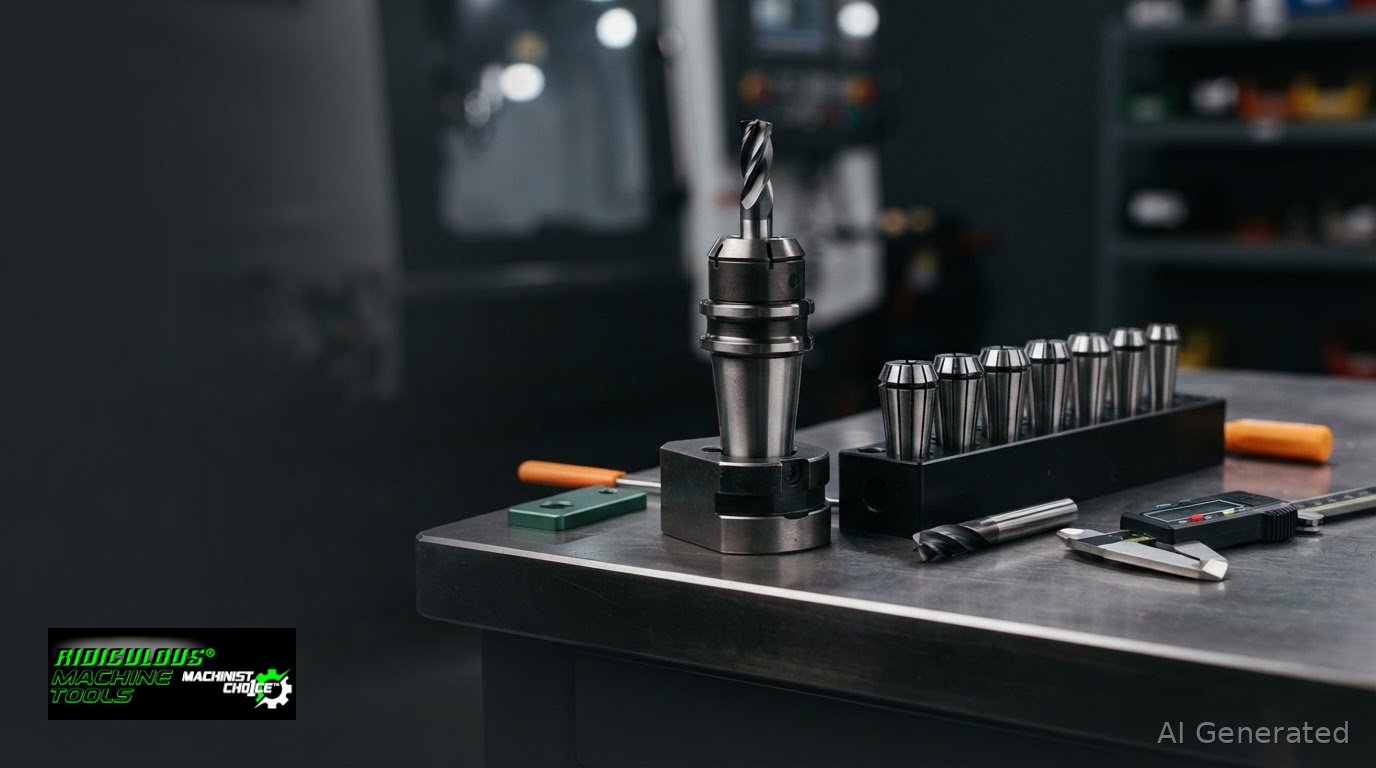
An er16 collet set for small diameter carbide end mills works only when the selected collet’s specified range suits the tool shank and the chuck matches the machine’s spindle interface. ER16 identifies the collet system, not the spindle connection, and runout at the cutting edge depends on the assembled toolholding system.
Set coverage matters, but so do collet fit, clean seating, and the runout of the complete assembly. Use the steps below to match shank diameters to collets, assess compatibility, and compare set contents and specifications. Ridiculous Machine Tools offers ER spring collets in multiple precision levels, with specifications provided for the applicable products.
Key Takeaways
- Match each tool shank to the collet’s listed size and collapsible range, not just the set label.
- Confirm that the chuck accepts ER16 collets and that its machine-side interface matches your spindle or intermediate holder.
- Check T.I.R. across the assembled toolholding system. Collet condition, seating, chuck geometry, and cleanliness all affect the result.
- Verify the set’s contents and product specifications, then follow the manufacturer’s instructions for assembly and tightening.
Why small-diameter carbide end mills need a well-matched ER16 collet
Start by matching the collet to the end mill’s shank diameter. Then confirm that the ER16 collet chuck accepts that collet and has the correct machine-side interface for your spindle or intermediate holder. A secure, concentric grip helps keep the tool rotating on axis. If the shank seats unevenly or the assembled tool has excessive runout, the cutting edges may not share the load evenly, which can affect wear, vibration, and surface finish.
A correct shank fit does not, by itself, establish the runout of the assembled setup. Collet condition, chuck geometry, cleanliness, and seating also matter. Check specifications for the exact product and configuration rather than assuming that a value applies to every ER16 collet or set.
What the ER16 designation tells you, and what it does not
ER16 identifies the collet system; it does not specify the end mill shank diameter, the collets included in a set, or the chuck’s spindle connection. Select a collet using the tool’s measured or specified shank diameter and the collet’s published size and collapsible range. The collet must match the chuck, and the chuck’s machine-side interface must match the spindle or intermediate holder. This overview of the ER collet system describes how a collet grips tooling within a compatible chuck.
Why small-tool setups are sensitive to fit
A small end mill has little room for errors in toolholding. If the shank is not centered or the rotating tool has runout, one flute may carry more of the cutting load than the others. Depending on the tool and cut, that can contribute to vibration, uneven chip formation, premature wear, or breakage. These are general machining considerations, not guaranteed outcomes or specifications for a particular collet.
When comparing products, look for the listed contents, collapsible ranges, and any T.I.R. specification for the exact item. Ridiculous Machine Tools offers ER spring collets in multiple precision levels. A published specification applies only where it is stated for the applicable product.
How ER16 collet fit and runout affect carbide end mill holding
T.I.R. (Total Indicator Runout) is the measured variation of a rotating surface or tool from its intended axis. A reading describes a particular measurement location and assembly, not every interface in the setup. The tool shank, collet, chuck, seating, and cleanliness can all affect runout at the cutting tool. Chips or residue between mating surfaces can interfere with seating and make measurements less repeatable.
Collet T.I.R. and taper-to-bore runout describe different interfaces. Collet T.I.R. refers to the collet’s measured runout, while taper-to-bore runout describes the relationship between a holder’s spindle taper and internal bore. Neither value alone establishes the runout at the end mill’s cutting edge in the complete assembly.
Match the collet bore to the end mill shank
Compare the end mill’s measured or specified shank diameter with the collet’s published size and collapsible range. The range is specific to the collet model, so do not infer it from ER16 or assume that one collet’s range applies to another. A shank outside the listed range is not a sound fit: the collet may not clamp as intended even if the nut can be tightened.
If you are comparing inch and metric tools, convert the nominal diameter when needed, then check it against the collet’s specified range. Do not choose a nearby size based only on a rounded conversion. The shank must fall within the range published for that collet.
Read runout claims in context
Before comparing T.I.R. claims, check what was measured, where the indicator contacted the tooling, and which components were included. A collet-only value does not establish the runout of the assembled tool. Likewise, a holder’s taper-to-bore figure does not describe the collet gripping the end mill. Runout from multiple interfaces can affect the result at the tool, so measure the assembled setup when that is the condition you need to evaluate.
For an ER16 collet set for small diameter carbide end mills, use the product listing to verify the actual contents, collapsible ranges, and any stated T.I.R. specifications. RMT offers ER spring collets in multiple precision levels; apply a published figure only to the product it identifies.
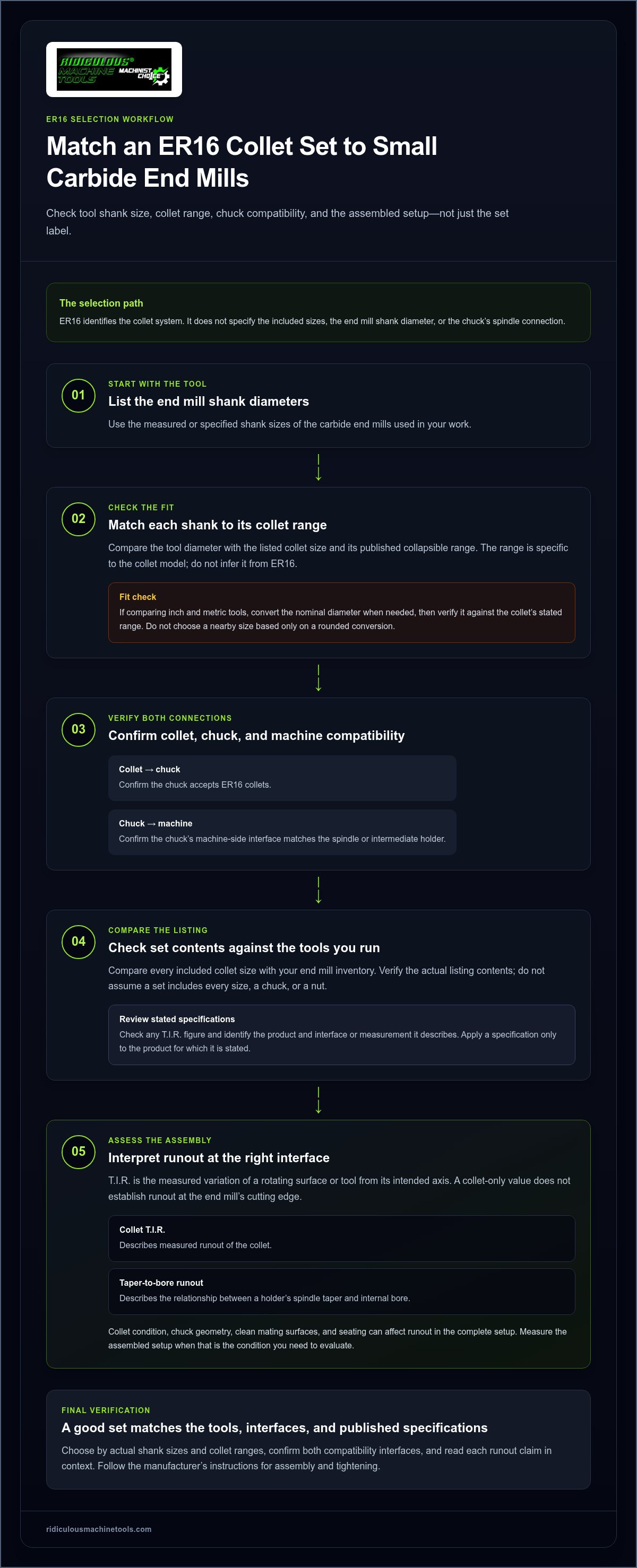
How to Evaluate an ER16 Collet Set for Your Shop
Choose a set based on the tools and holder used in your process, not simply the number of pieces in the case. Use this sequence to compare options:
- List the end mill shank diameters you use, based on measured or specified sizes.
- Compare each diameter with the listed size and collapsible range of the collet intended to hold it.
- Confirm that the chuck accepts ER16 collets and that its machine-side interface matches your spindle or intermediate holder.
- Review the set contents and any stated specifications, including T.I.R. and the interface or measurement that value describes.
Check set contents against the tools you actually run
Compare every included collet size with your end mill inventory. A set covering shanks used regularly can simplify tool changes. If your work uses only a few diameters, individual collets may be a more practical fit. Confirm the listed contents rather than assuming a set includes every size, a chuck, or a nut. Check the applicable listing for the actual contents and specifications before choosing an er16 collet set for small diameter carbide end mills.
Confirm the chuck and machine-side connection
Check two separate interfaces: the collet series must match the chuck, and the chuck’s machine-side interface must fit your spindle or intermediate holder. RMT’s ER collet chuck options can help you compare chuck configurations with those requirements.
Choose a precision level based on the application and the specification published for that product. A stated T.I.R. value applies only to the product and measurement conditions identified in its listing. Do not transfer a figure from another collet family or size to an ER16 item. RMT offers multiple collet configurations and precision levels in its ER spring collet selection.
Setup and Maintenance of ER16 Collets for Carbide Tools
Repeatable toolholding starts with clean, undamaged parts and correct assembly. Before installing an end mill, inspect the collet, nut, chuck taper, and tool shank. Chips, dried coolant, or visible damage can interfere with seating. Follow the collet and chuck manufacturer’s assembly and tightening instructions. Do not guess at a torque value or force a part that does not seat correctly.
Inspect and seat the collet correctly
Wipe mating surfaces clean and check the collet slots, nut engagement features, chuck taper, and tool shank for debris, burrs, or damage. Confirm that the collet size and specified range suit the tool shank. Assemble and seat the collet in the nut and chuck in the order prescribed by the manufacturer, then tighten according to its instructions. Before machining, confirm that the tool is held securely and seated straight.
Use this sequence to reduce avoidable seating problems:
- Clean and inspect the collet, nut, chuck, and tool shank.
- Confirm the collet’s marked size and listed range suit the shank.
- Assemble the components as directed by their manufacturer.
- Check that the tool seats straight and the assembly tightens normally.
Know when to replace or review a collet
Visible damage, inconsistent grip, or unexplained runout calls for inspection of the complete assembly. Check for contamination and confirm that the correct collet is seated properly. Do not rely on a cracked, distorted, or otherwise damaged collet for repeatable holding. Replace it with a compatible collet that matches the tool shank and chuck system.
There is no single replacement interval that fits every shop or use pattern. Inspect collets as part of routine tooling checks and follow the manufacturer’s care and replacement guidance. For product-specific size and specification details, review RMT’s ER spring collets.
Make Your Next Tooling Choice Deliberate
Before choosing an ER16 collet set for small diameter carbide end mills, list the shank diameters you use and confirm the chuck and spindle connections in your setup. Then compare the listed collet sizes, ranges, and specifications with those requirements instead of choosing by piece count alone. This gives you a practical basis for selecting and standardizing toolholding for the work you run.
Ridiculous Machine Tools offers ER spring collets in multiple precision levels and configurations. Compare RMT ER spring collets and review the applicable product page for each item’s specifications.
Frequently Asked Questions
What does ER16 mean on a collet set?
ER16 identifies the collet system, not the end mill shank diameter. The collet, chuck, and nut must be compatible with that system. ER16 alone does not tell you which tool diameters are included in a set or which spindle interface the chuck uses. Check those details separately in the product information.
Does an ER16 collet set include an ER16 collet chuck?
Set contents vary. Check the listing to see exactly what is supplied rather than assuming it includes a chuck, nut, or other component. Compare the listed collet sizes with your tool inventory, then account for a compatible ER16 chuck and its machine-side interface if they are not included.
Can an ER16 collet hold both metric and inch end mill shanks?
A collet can grip a shank only when its actual diameter falls within the collet’s specified range. Convert the tool’s nominal size if needed, then compare the diameter with the listed range. An inch-size tool does not automatically fit a nearby metric collet. Select the collet based on the shank diameter and the range published for that specific collet.
How do I know whether a collet is gripping a carbide end mill correctly?
Check that the shank enters without force, sits straight, and is held securely after assembly according to the manufacturer’s instructions. To check runout, place an indicator on a clean, straight portion of the shank and rotate the assembled setup by hand with the spindle stopped. Interpret the reading in context: the indicator location and the complete holder assembly affect the result.
What should I check if a small end mill slips in its collet?
Stop and inspect the tool and holding components. Confirm that the shank diameter matches the collet range, the collet is seated correctly, and the nut and chuck are clean and undamaged. Check the shank for oil, chips, or damage to its gripping surface. If slipping continues after checking the fit and assembly, review the manufacturer’s tightening instructions and inspect for wear before using the setup again.
Article by
Ridiculous Machine Tools Technical Team
The Ridiculous Machine Tools Technical Team provides practical information about precision machine tooling, CNC tooling, workholding, and related manufacturing applications. RMT focuses on helping machinists, manufacturers, fabricators, and other customers understand tooling specifications, compatibility, selection, and proper application. Our technical content draws on product specifications, industry knowledge, and RMT's quality-control experience to provide clear, useful information for selecting and using machine tooling and workholding products.
Ridiculous Machine Tools — Machinist's Choice™