
ER Collet Guide: Maximize Machining Precision
Posted by RMT on Oct 12th 2026
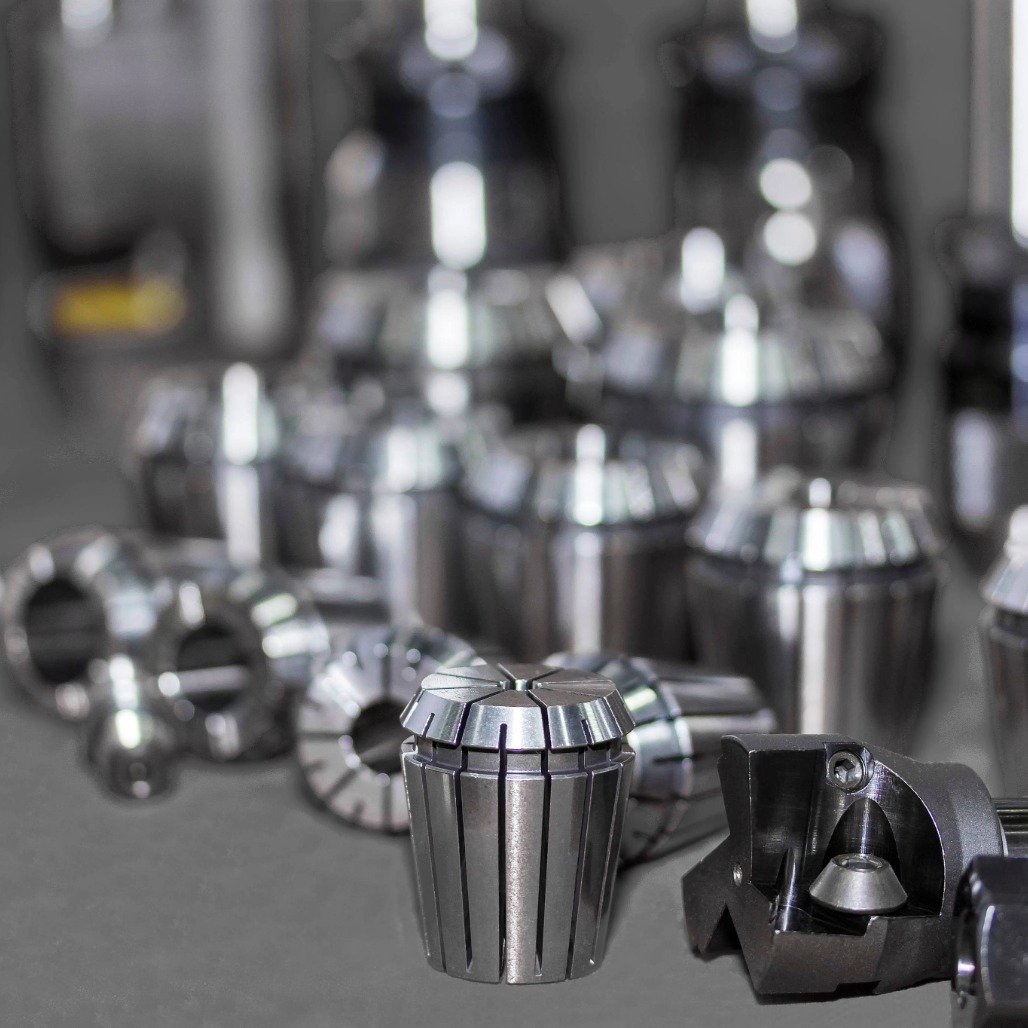
An ER collet must match the chuck’s ER series and the tool shank diameter; a precision label alone does not establish that it fits your setup. To choose one, verify the collet and chuck compatibility, compare the tool’s nominal shank diameter with the collet’s stated collapsible range, then assess the listed T.I.R. and other specifications against the application.
The collet, chuck, nut, tool, and machine setup all contribute to the assembled system’s runout. This guide explains how to check those interfaces, compare precision levels, and choose a configuration for coolant-through use or compatible tapping applications. RMT lists High Precision ER Spring Collets at 0.0003"-0.0004" T.I.R. and Ultra Precision ER Spring Collets at 0.0001"-0.0002" where specified on the applicable product page. Exact specifications vary by product and size.
Key Takeaways
- Match the ER series to the compatible chuck and nut arrangement before comparing collet options.
- Measure the tool shank and check the collet’s stated collapsible range to confirm fit.
- Compare an ER collet’s listed T.I.R. specification, not just its precision label; stated RMT values vary by product and size.
- For coolant-through use, compare Steel Sealed options and verify the specific collet’s listed configuration and pressure rating.
ER Collet Fit: Match the Series, Chuck, and Tool Shank
An ER spring collet is a slotted holder that contracts around a cylindrical tool shank when properly seated and tightened in a compatible ER collet chuck. Its collapsible range is the stated diameter range over which it can grip. For a general explanation of the collet mechanism, see this Collet reference.
Check three separate interfaces: the ER series for collet-to-chuck compatibility, the tool diameter for fit within the collet’s stated range, and the chuck interface for mounting the holder to the machine. A tool diameter that fits the collet does not make the collet compatible with a different ER series or make the chuck compatible with the machine.
What must match between an ER collet and its chuck?
Identify the ER series of both the collet and compatible chuck, and account for the chuck’s nut arrangement. For example, an ER32 collet is selected for an ER32 chuck. ER32 does not describe the tool shank diameter. The chuck’s spindle taper and machine connection determine whether the holder fits the machine, not which collet grips the tool. Compare ER spring collet options with the chuck’s specifications before assembling the system.
How do you check tool diameter fit?
Confirm the tool’s documented nominal shank diameter, then compare it with the collapsible range stated for the exact collet size and configuration. Do not infer the range from the ER series alone. Ranges can vary by collet size and product, so use the applicable product listing rather than assuming a value.
If the tool’s nominal shank diameter falls outside the listed range, that collet is not the correct fit, even if its series matches the chuck. Once series and diameter are confirmed, consider the application requirements, such as the required runout specification or coolant-through delivery. Keeping the collet, tool, chuck, and machine connection as separate checks helps prevent a compatible-looking but mismatched setup.
ER Collet Precision Levels: Compare T.I.R. and Application Needs
T.I.R. (Total Indicator Runout) is a stated measurement of runout, not a general rating of machining quality. A lower listed value means a tighter runout specification for that product. It does not, by itself, predict the result of a machining operation. The machine spindle, chuck, nut, tool, and setup also affect runout in the assembled system.
When does a tighter stated T.I.R. matter?
Runout can affect how cutting edges share the load. Uneven engagement may influence finish, tool wear, and repeatability, particularly in operations with demanding requirements. Choose a collet specification based on the operation’s runout requirements and the full setup, including the machine and tool. A tighter collet specification alone does not guarantee a particular machining result.
How should you compare RMT precision families?
Compare the stated T.I.R. for the specific collet size and product listing. RMT’s published family values are:
- Ultra Precision ER Spring Collet: 0.0001"-0.0002" T.I.R. where listed on the applicable product page.
- High Precision ER Spring Collet: 0.0003"-0.0004" T.I.R. where listed on the applicable product page.
These figures apply only to products whose listings state them. Do not assume every size or configuration in a family carries the same specification. T.I.R. describes a measured runout characteristic, not every factor that affects machining accuracy.
Use the applicable specification to compare options with the operation’s requirements, then verify the exact size and configuration. Review RMT’s ER spring collet options for product-specific details.
ER Collet Buying Checklist: Verify Size, Use, and Setup
Confirm basic fit before choosing by application. For an ER collet, first identify the chuck series, then confirm the tool shank diameter and check that it falls within the specific collet’s stated collapsible range. After that, compare the listed specifications and configuration with the job.
Which ER collet type fits the application?
- General-purpose ER spring collet: Consider one when its listed specifications and configuration suit the tool and operation.
- High Precision or Ultra Precision: Compare the product-specific T.I.R. values with the operation’s runout requirements.
- Steel Sealed: Consider for coolant-through applications. Check the exact listing for coolant configuration and pressure rating, as these details vary by product.
- ER Tap Collet: Use with a compatible ANSI-style tap that matches the collet’s shank and square-drive arrangement. The internal square drive engages the tap’s square.
Choose a sealed collet when the setup calls for coolant-through delivery, not simply because of its design. Do not assume every ER collet supports coolant-through use or that every sealed collet has the same pressure rating. Match the configuration to the intended setup.
What should you confirm before ordering?
Check the ER series, nominal tool diameter, stated collapsible range, and compatibility with the chuck and nut. Then review the exact product listing for T.I.R. and coolant details. A family name alone does not establish that every size has the same specifications.
Reusable listing check: “Does the collet series match the chuck, does the tool’s nominal shank diameter fall within this collet’s stated range, and do the listed T.I.R. and coolant specifications fit the application?”
If you need the matching holder as well, compare ER collet chuck options by series and machine interface.
Browse compatible ER collet chucks
Choose an ER Collet and Chuck Combination for Your Machine
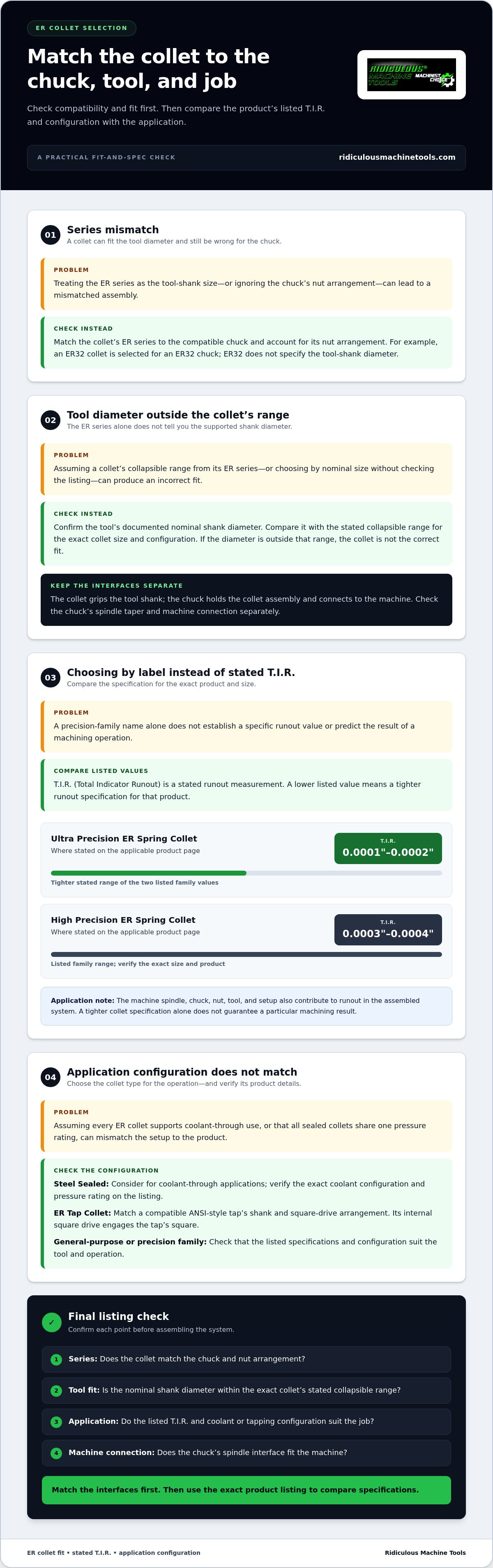
After confirming the collet series, tool fit, and application requirements, select a chuck that connects the collet system to your machine. The ER collet grips the tool shank; the chuck holds the collet assembly and provides the machine-spindle interface. These are separate compatibility checks.
When should the chuck be part of the purchase decision?
Include the chuck in the decision whenever you are assembling or replacing the holder. A correctly sized collet may fit the tool, but it does not establish spindle compatibility. Match the chuck’s machine interface to the spindle, then verify its ER series and nut arrangement against the collet. The machine-side taper and the collet’s tool-gripping size describe different parts of the setup. RMT offers ER collet chucks in configurations including CAT40 and CAT50. Confirm the exact chuck’s specifications against your machine before selecting a combination.
Where can you compare available ER collet options?
Use the ER spring collet category to compare product listings and their specific details. Check the selected collet and chuck as a system. Runout, balance, coolant configuration, and other chuck specifications can vary by model, so rely on the exact listing rather than applying a figure from another configuration. RMT’s selection lets machinists compare options by listed specifications and application, with Machinist's Choice™ reflected in a practical, specification-led approach.
For broader context on matching the spindle-side holder interface to your machine, consult a toolholding selection resource alongside the machine and chuck specifications.
Compare ER collet chuck options
Make Your Next Collet Selection with Confidence
A sound ER collet choice starts with compatibility: match the collet series to the chuck, confirm the tool shank fits the specific collet’s stated range, and select a chuck that connects to your machine spindle. Then compare T.I.R. and other listed specifications with the operation’s requirements, not product labels alone.
Ridiculous Machine Tools offers High Precision, Ultra Precision, Steel Sealed, and Tap Collet categories for different applications. Specifications apply to the individual configuration listed, so review the applicable product details rather than assuming a value carries across a product family. This helps you narrow the options without treating a collet and chuck as interchangeable parts.
Compare ER spring collet options
With the series, fit, machine interface, and application requirements established, use the listed specifications to make an informed tooling choice.
Frequently Asked Questions
How do I choose the right ER collet size?
Match the collet’s series to the compatible chuck, then compare the tool’s documented nominal shank diameter with the collet’s stated collapsible range. Do not choose by series alone: the tool diameter must also fall within the range listed for that specific collet. Once fit is confirmed, compare the product’s stated T.I.R. and other specifications with the operation’s requirements.
Can an ER collet fit any ER collet chuck?
No. Match the collet’s ER series to the compatible chuck and nut arrangement. A tool shank that fits the collet’s diameter range does not establish collet-to-chuck compatibility. Also check the chuck’s machine-side interface against the spindle. The collet grips the tool; the chuck holds the collet and connects the assembly to the machine. These are separate fit checks.
What is the difference between High Precision and Ultra Precision ER Spring Collets?
The distinction is the stated T.I.R. specification where it appears on the applicable product page. RMT lists 0.0003"-0.0004" T.I.R. for High Precision ER Spring Collets and 0.0001"-0.0002" T.I.R. for Ultra Precision ER Spring Collets where specified. Compare the exact product listing with the operation’s runout requirements. T.I.R. is a measurement, not a complete rating of machining quality.
When should I use a Steel Sealed ER Spring Collet?
Consider a Steel Sealed ER Spring Collet for a coolant-through application. Check the exact collet’s coolant configuration and pressure rating in its product listing, as those specifications vary by product. Also verify that the collet, chuck, and machine setup are compatible with the intended coolant delivery. Do not assume a standard collet has a seal or that every sealed collet supports the same pressure.
Can an ER collet hold a tap?
Yes. An ER Tap Collet grips the round shank and engages the square drive of a compatible ANSI-style tap. Match the tap’s shank and square-drive arrangement to the collet, then confirm that the collet series matches the chuck. The internal square drive distinguishes a tap collet from a standard ER spring collet, so check the specific product details before selection.
Article by
Ridiculous Machine Tools Technical Team
The Ridiculous Machine Tools Technical Team provides practical information about precision machine tooling, CNC tooling, workholding, and related manufacturing applications. RMT focuses on helping machinists, manufacturers, fabricators, and other customers understand tooling specifications, compatibility, selection, and proper application. Our technical content draws on product specifications, industry knowledge, and RMT's quality-control experience to provide clear, useful information for selecting and using machine tooling and workholding products.
Ridiculous Machine Tools — Machinist's Choice™